





Built to Last: What to Look for When Inspecting Used Office Desks
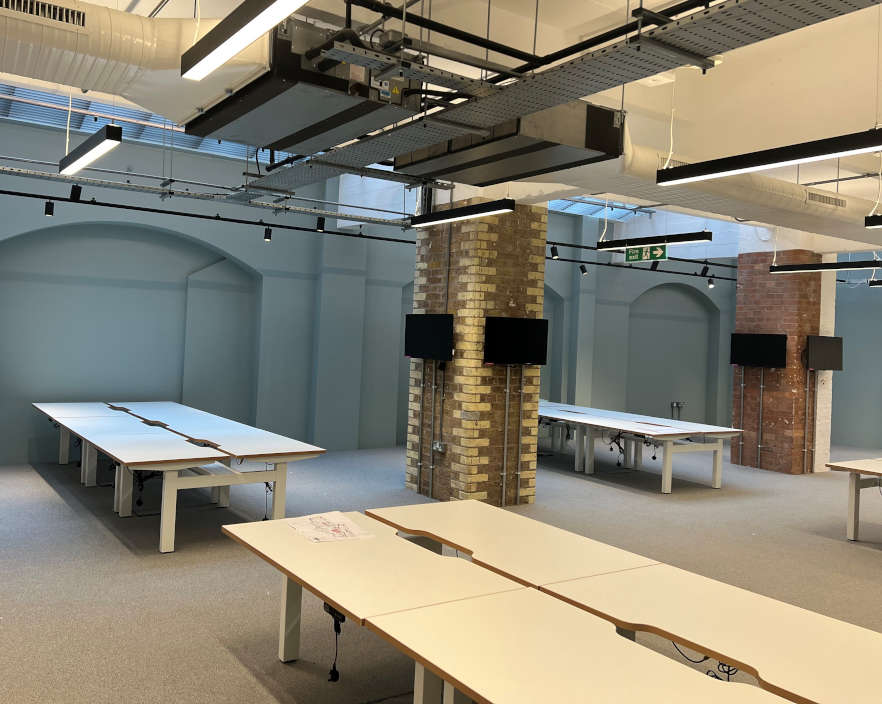
A few scratches don't necessarily make a used office desk a bad investment. Equally, a spotless desktop doesn't automatically make it a good one.
When buying second-hand office furniture, appearance only tells part of the story.
The real question is what sits underneath.
A well-made commercial desk can spend years in one workplace and still have plenty of useful life ahead of it. By contrast, a desk originally designed for occasional or light use may look almost new but struggle with the demands of a busy office.
At Andrews Office Furniture, we've worked with commercial furniture for decades. During that time, we've handled thousands of desks from office relocations, clearances and refurbishments across London and the South East.
That experience teaches you where to look.
So, if you're considering used office desks for your workplace, how can you tell whether you're looking at a genuine commercial-grade product that's built to last?
Start Underneath the Desk, Not on Top of It
Most people naturally look at the desktop first.
We tend to notice a scratch, small chip or mark immediately because it's easy to see. However, these cosmetic details don't necessarily tell you much about the quality of the desk.
Instead, look underneath.
The frame and supporting structure give you a much better indication of how manufacturers designed the desk and how well it has survived its previous working life.
Quality commercial desks often use substantial metal frames with strong connections between the legs, beams and worktop. The entire structure should feel rigid rather than lightweight or flexible.
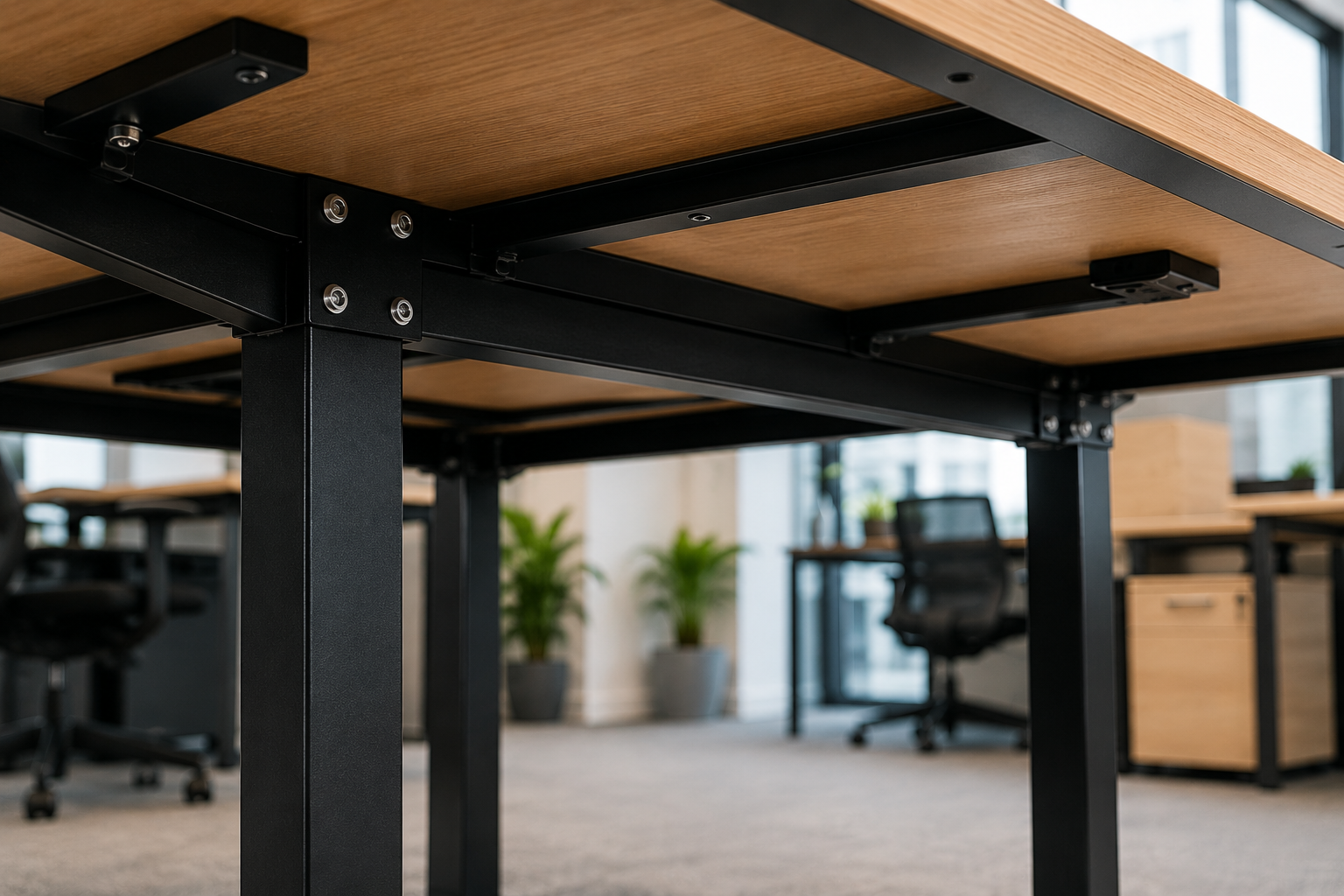
Give the desk a gentle push from different directions.
Does it remain stable?
Do the legs move independently?
Can you hear fixings shifting?
A few marks on a worktop might have no effect on how the desk performs. A weak frame is a much bigger concern.
Andrews Insight: When assessing used desks, we'd generally rather see a structurally excellent commercial desk with minor cosmetic wear than a pristine-looking desk with a lightweight or unstable frame. You can live with a small mark. You don't want to work at a desk that moves every time you type.
Check Whether It Was Built for Commercial Use
Not every desk for sale as "office furniture" started life as commercial office furniture.
That's an important distinction.
Manufacturers design commercial desks to cope with repeated daily use. Employees may work at them for eight hours a day, five days a week. They support monitors, computers, docking stations and other equipment while dealing with the knocks and movement that naturally occur in a working office.
Commercial furniture manufacturers account for that workload when they design their products.
Look for solid construction, substantial frames, durable worktops, robust edging and good-quality fittings. Adjustable feet are another useful feature because installers can level the desk properly on uneven office floors.
You should also consider the overall weight and rigidity of the product. Weight alone doesn't guarantee quality, but a well-engineered commercial frame often feels noticeably more substantial than furniture designed for occasional domestic use.
You're not simply looking for a desk that looks professional.
You're looking for one that was engineered to work professionally.
Test Stability Before Anything Else
A desk's most basic job is also one of the most important: it needs to stay still.
An unstable desk quickly becomes frustrating. Monitor screens can move when someone types, adjoining workstations can shake and employees may find themselves constantly adjusting the furniture.
Fortunately, stability is relatively easy to check.
Apply gentle pressure to the front, sides and corners of the desk. A quality workstation should remain firm without excessive sideways movement.
If it does move, don't immediately assume the desk has reached the end of its life. Sometimes a loose fixing or incorrectly adjusted foot causes the problem.
That's another advantage of good commercial furniture. Manufacturers often design individual components so installers can adjust, tighten or replace them rather than disposing of the entire desk.
However, if the frame itself has become distorted or connection points have suffered significant damage, we'd think much more carefully before putting that desk back into commercial use.
Inspect the Worktop — But Know What Matters
Once you're happy with the structure, turn your attention to the desktop.
Some signs of previous use are perfectly normal.
Light scratches, small marks and minor cosmetic
imperfections don't necessarily affect the performance or lifespan of a commercial desk. Once you've added monitors, keyboards and other equipment, you may barely notice them.
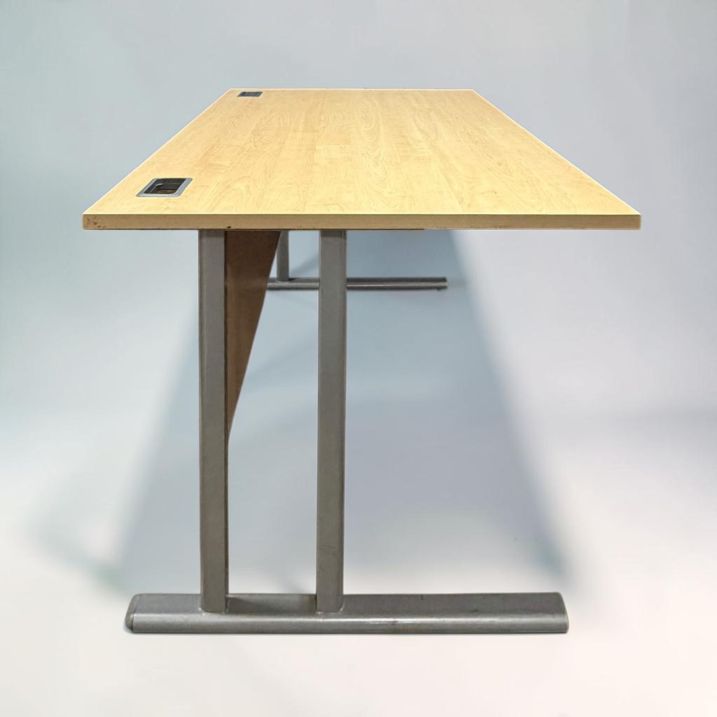
Instead, pay particular attention to the edges and corners.
Look for significant chips, lifting edging or areas where moisture has caused the board underneath to swell. Check around cable ports and fixing points too, as these areas can reveal how the desk has handled previous use.
Also look across the surface rather than only down at it.
Has the worktop remained flat?
Does it show any significant bowing?
Has anything compromised the areas where the top connects to the frame?
The objective isn't to find a desk without a single mark. It's to separate normal cosmetic wear from damage that could affect future performance.
Look at the Fixings and Connection Points
This is an area many buyers overlook.
A commercial desk isn't simply a desktop sitting on four legs. The connection points holding the system together play an important role in its long-term durability.
Check where the frame meets the desktop and where horizontal beams connect with the legs.
Screws and bolts should sit securely. Brackets shouldn't show obvious distortion, and holes shouldn't appear badly enlarged from repeated dismantling and reassembly.
This becomes particularly important with bench desking.
Bench systems connect several workstations together, so the quality of those connections affects the stability of the entire arrangement.
Good commercial furniture can often cope extremely well with office moves and reconfiguration. However, careful dismantling and professional reassembly make a difference.
That's one reason knowing where your second-hand furniture comes from — and who has handled it — matters.
Check the Features You'll Actually Use
Structural quality comes first, but don't forget about everyday practicality.
Look at the cable management.
Modern offices can have an extraordinary amount of cabling beneath each workstation. Computers, monitors, chargers, phones and docking stations all need power and data connections.
A good commercial desk should help you manage those cables rather than leaving them hanging across the floor.
Check whether cable trays remain securely attached and whether desktop cable ports are intact.
If you're buying desks with screens, monitor arms or other accessories, inspect their mounting points as well.
For height-adjustable desks, test the complete adjustment range and listen for unusual noises from the mechanism. Make sure the desk moves smoothly and remains stable at different heights.
A feature only adds value if it still works properly.
Think About the Desks as a Complete Office
Buying one used desk is relatively straightforward.
Buying forty is a different challenge.
Businesses need to think beyond the condition of individual items and consider how the furniture will work together across the office.
Can the supplier provide enough matching desks?
Are the dimensions consistent?
Can you add more workstations later?
Will the layout accommodate screens, pedestals and cable management?
This is where buying through a commercial office furniture specialist can make a considerable difference.
A bargain desk isn't particularly useful if you need another ten in six months and can't find anything that matches it.
For growing businesses, availability and consistency can matter almost as much as condition.
Understand Why the Furniture Became Available
There's a common assumption that businesses sell second-hand office furniture because something is wrong with it.
Often, that's simply not the case.
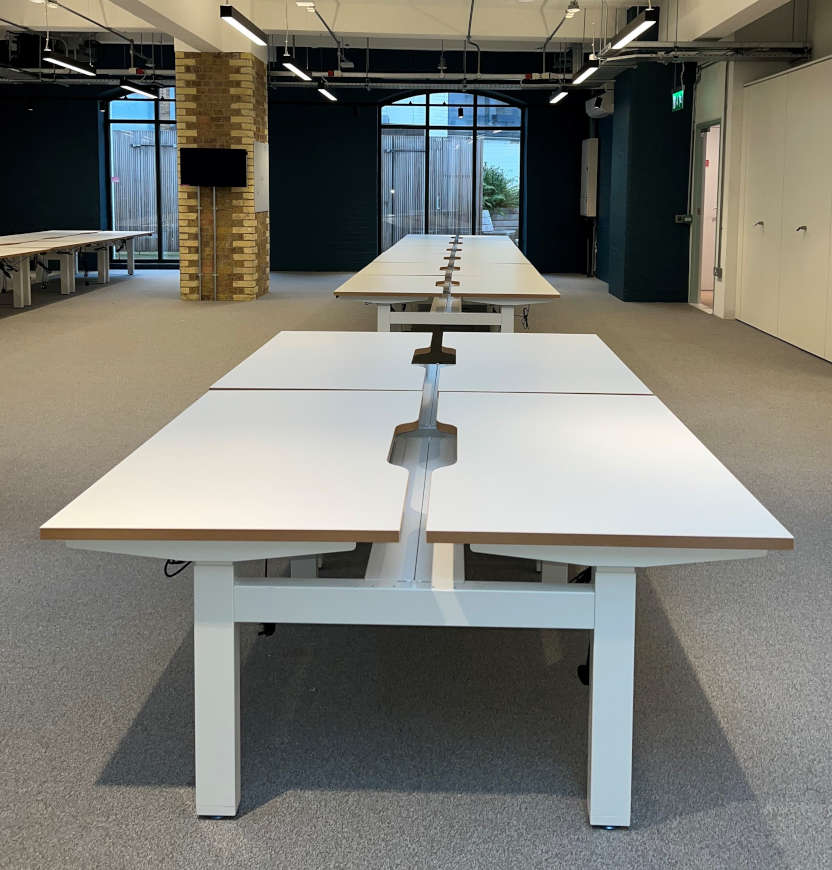
Companies move premises, reduce their office footprint, change layouts, merge departments or replace furniture as part of a wider refurbishment.
As working patterns change, an organisation may also find itself with far more desks than it needs.
That can put large quantities of matching commercial furniture onto the second-hand market while the products still have years of useful life remaining.
This is one of the reasons used commercial furniture can offer such good value.
You're not necessarily buying furniture that somebody has worn out.
Sometimes you're buying furniture that another business simply no longer has space for.
Why the Supplier Matters as Much as the Desk
Online marketplaces make it easier than ever to find second-hand furniture, but photographs only reveal so much.
A desk can look excellent from one angle while hiding damaged fixings, missing components or stability problems underneath.
A specialist supplier should understand what makes commercial furniture suitable for another working life.
At Andrews Office Furniture, we assess second-hand furniture with future use in mind. We look beyond superficial appearance and consider the construction, condition and practicality of the product before it reaches another office.
There's also another consideration: getting it there.
Commercial desks can be large, heavy and difficult to transport. Once they arrive, someone still needs to assemble and position them correctly.
Choosing the right furniture is only part of the job. Professional delivery and installation help ensure that the furniture starts its second working life exactly as it should.
Final Thoughts
Buying used office desks shouldn't mean lowering your standards.
In many cases, it gives businesses the opportunity to buy a higher standard of furniture for the same budget.
The key is knowing what you're looking at.
Ignore a few harmless cosmetic marks for a moment and concentrate on what really matters: the frame, stability, worktop, connection points, fittings and original build quality.
Then think beyond the individual desk. Consider whether you can source matching furniture, whether it suits your office layout and whether an experienced team can install it correctly.
At Andrews Office Furniture, years of working with commercial furniture have taught us that age alone tells you very little about quality.
A well-built desk doesn't suddenly stop being a good desk because another business has used it before. Choose carefully, inspect what matters and commercial-grade furniture can continue doing the job it was designed to do for years to come.