




How to Furnish a 20-Person Office Without Wasting Your Budget
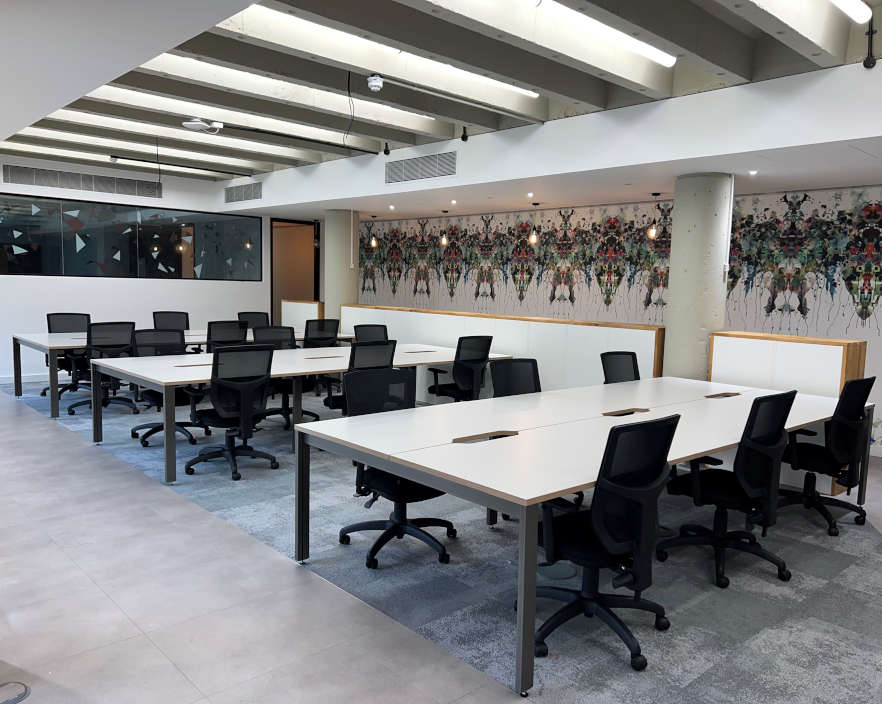
Furnishing an office for 20 people sounds straightforward.
You need 20 desks and 20 chairs. Add some storage, a meeting table and perhaps a few cupboards, and you're finished.
Except that's rarely how a successful office fit-out works.
The furniture needs to fit the space. Employees need enough room to work comfortably. Cables need somewhere to go. Meeting spaces need to reflect how people actually use them. And if the business grows, today's perfect layout can quickly become tomorrow's problem.
Then there's the budget.
At Andrews Office Furniture, we've spent decades helping businesses across London and the South East furnish workplaces of every size. One thing we've learned is that spending more doesn't automatically create a better office.
What matters is where you spend the money.
A carefully planned 20-person office can be professional, comfortable and practical without buying the most expensive option in every category.
The trick is knowing where quality matters, where you can save and what you probably don't need in the first place.
Don't Start by Buying 20 Desks
This might sound strange coming from an office furniture company.
However, your first job isn't choosing furniture.
It's understanding the room.
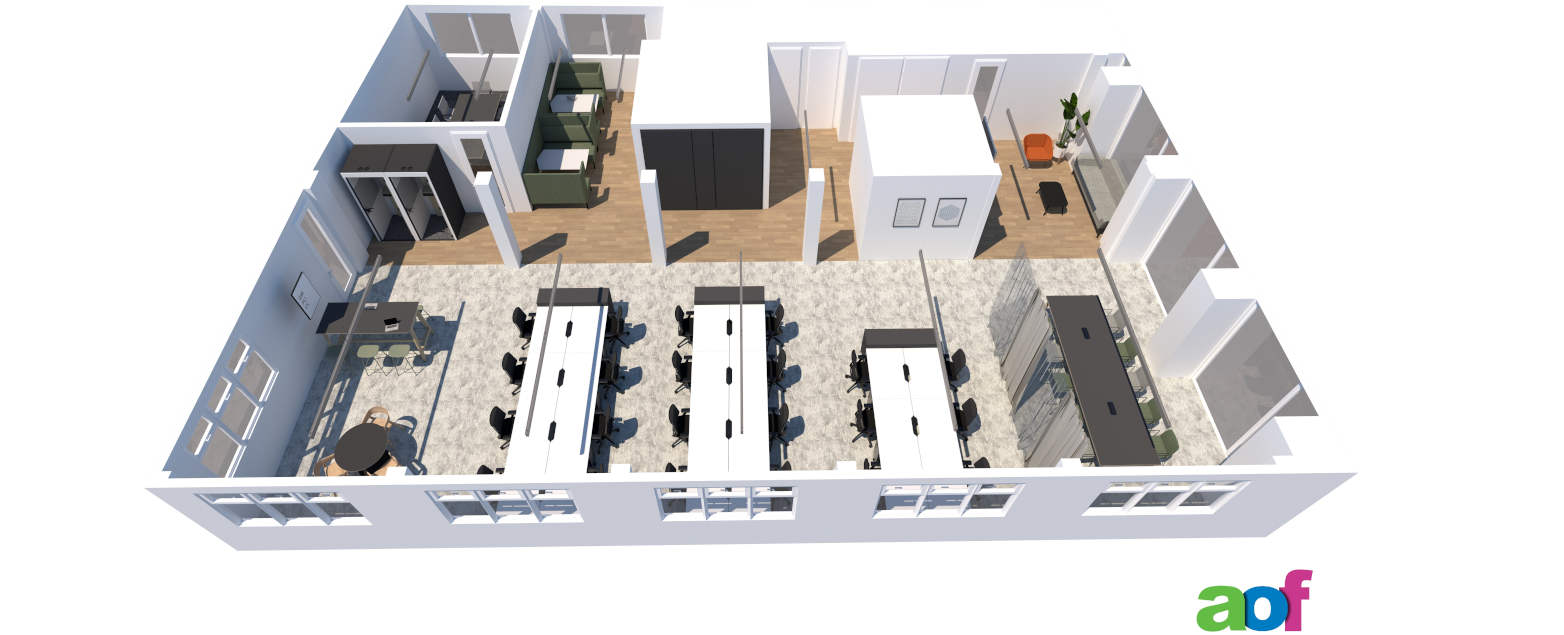
Before buying anything, look at the usable floor space, windows, doors, columns, radiators, power points and access routes. Think about how employees move through the office and where teams need to sit.
Then consider how many people will actually be there.
A business with 20 employees doesn't necessarily need 20 permanent workstations. If several people work remotely for part of the week, fewer desks combined with flexible working areas might make better use of the space.
The opposite can also be true.
If you have 20 employees today but expect to recruit another five within the next year, designing an office that only works for exactly 20 people could create an expensive problem surprisingly quickly.
So, before you look at desk finishes or chair fabrics, answer three questions:
How many people use the office now? How many desks do you genuinely need? How many people might need space in 12 to 24 months?
Those answers should shape everything that follows.
Spend Properly on the Furniture People Use All Day
Not every piece of office furniture deserves the same share of your budget. A decorative side table might be used for a few minutes each day. A desk and chair can be used for seven or eight hours.
That's where we'd concentrate first.
For desks, look for strong commercial frames, suitable worktop sizes and sensible cable management. The desks don't need to be extravagant, but they do need to remain stable and practical under daily use.
Seating deserves even more thought.
An office chair directly affects the person sitting in it throughout the working day. Adjustment, support and suitability matter far more here than choosing something simply because it looks good in a photograph.
If the budget is tight, we'd rather see a business save money on decorative furniture and put more of the available spend into the workstations employees use every day.
That's not the most exciting part of an office fit-out. It's usually one of the most important.
Bench Desking Can Make the Budget Work Harder
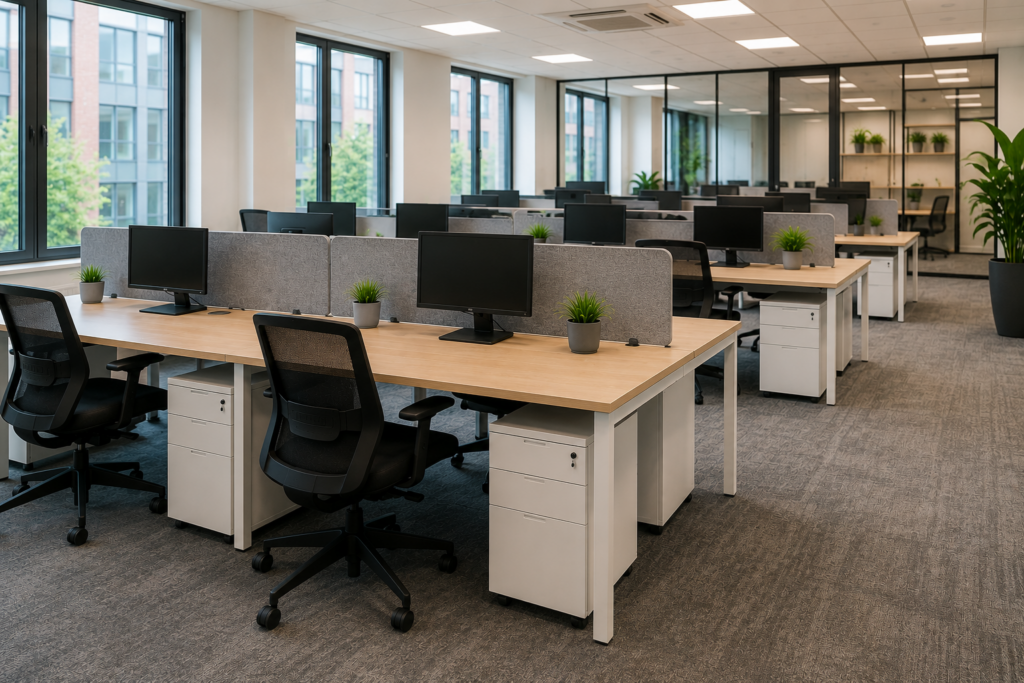
For a 20-person office, bench desking is often worth considering.
Instead of treating every workstation as a completely separate piece of furniture, bench systems allow several desks to share a coordinated structure. This can create a clean, organised workplace while making efficient use of the available floor area.
For example, rather than placing twenty individual desks around the perimeter of a room, you might create four banks of five workstations or five banks of four, depending on the space and the desk system.
Bench desking can also make cable management easier because power and data can be organised centrally rather than running separately to every desk.
There's another advantage.
If good-quality second-hand bench desks are available in the quantity you need, the savings compared with specifying an entirely new commercial system can be substantial.
For a 20-person office, that difference can release budget for the things employees notice much more directly—particularly good seating.
New or Second-Hand? Don't Make It an Either/Or Decision
There's no rule saying every item in an office needs to have the same purchasing history. In fact, a mixed approach can be one of the smartest ways to control a fit-out budget.
You might choose high-quality second-hand commercial desks and pedestals, then invest in new ergonomic chairs.
Perhaps you find an excellent second-hand boardroom table but specify new meeting chairs to achieve the finish you want.
Storage is another area where second-hand commercial furniture can make excellent financial sense.
A good steel filing cabinet or commercial cupboard doesn't become less useful simply because another company owned it first.
The important thing is to look at the quality and condition of the product, not just the new or used label.
If the furniture works together visually, employees and visitors don't need to know which items came directly from a manufacturer and which are starting their second working life.
They should simply see a well-furnished office.
Be Careful With Storage
Storage is one of the easiest areas to over-specify. Historically, offices needed large filing systems because businesses generated enormous quantities of paperwork.
Many modern workplaces don't. Before filling walls with cupboards and filing cabinets, ask what employees actually need to store.
Do they use paper files? Do teams need shared storage? Are employees allocated personal pedestals?
Do coats and bags need somewhere to go? Could lockers work better for hybrid employees who don't have permanent desks?
Storage should solve a real problem. Otherwise, it consumes both money and valuable floor space.
That's particularly important in London, where every square metre of office space comes at a cost.
A cupboard you don't need isn't just an unnecessary furniture purchase. It's also occupying space that could potentially be used for another workstation, a collaboration area or simply a less crowded office.
Don't Build a Boardroom Nobody Uses
The same principle applies to meeting furniture.
It's easy to design an office around the idea that every business needs a traditional boardroom with a large table and twelve chairs.
But does yours? Think about how meetings actually happen.
If most internal meetings involve three or four people, a smaller meeting table may get far more use. If client meetings regularly involve larger groups, then a proper boardroom becomes easier to justify.
A 20-person company might benefit from a six-to-eight-person meeting room combined with a smaller informal meeting area rather than devoting a large proportion of the office to one oversized table.
Again, the question isn't: What furniture normally goes in an office?
It's: What does this particular business need its office to do?
That small change in thinking can prevent a surprising amount of wasted expenditure.
Remember the Things That Don't Appear on the Furniture List
A budget can disappear quickly when you've only accounted for the obvious items.
Twenty desks and chairs aren't the whole project. You may also need monitor arms, desk screens, cable trays, power modules, pedestals, coat storage, meeting chairs and breakout furniture.
Then there are the practical elements of getting everything into the office.
Who is delivering it? Does it arrive assembled?
If not, who is building it? Does old furniture need removing first?
Are there stairs, lifts or restricted delivery times at the building?
How much disruption will installation cause?
These questions become especially important when comparing prices between suppliers.
A desk that appears cheaper online may look less attractive once twenty flat-packed units arrive and somebody within the business has to work out how they're going to be assembled.
The product price is only part of the cost of furnishing an office.
Plan for Growth Without Furnishing an Imaginary Company
There's a balance to strike here.
You don't want to furnish an office for exactly 20 people if you already know employee number 21 is starting next month.
But buying 30 complete workstations because you might grow eventually isn't necessarily sensible either.
Furniture sitting unused still costs money.
A better approach is to consider how easily the workplace can adapt.
Could another bank of desks be added later? Is there a matching range available? Could a collaboration area become workstation space if necessary?
Would a bench system allow you to extend the layout?
If you're buying second-hand furniture, availability needs particular consideration. A supplier might have 24 matching desks today, but that doesn't guarantee the same model will be available in six months.
Sometimes buying a few additional matching desks at the outset makes sense.
Buying an entire imaginary office usually doesn't.
Set the Budget by Priority, Not by Room
One useful way to approach a 20-person fit-out is to stop thinking about the office as a shopping list.
Instead, divide the budget by importance.
Your first priority should be the furniture employees interact with throughout the working day: desks and chairs.
Your second priority is the infrastructure that makes those workstations function properly: cable management, screens, power access and appropriate storage.
Your third priority is shared furniture such as meeting tables and meeting chairs.
After that come breakout areas, reception furniture and more decorative pieces.
The exact order will change between businesses, but the principle remains useful.
Protect the budget for the things that affect daily work.
Then use what's left to improve the wider environment.
Andrews Insight:
We've seen offices where significant sums have been spent creating an impressive reception area while employees work at poor-quality desks and unsuitable chairs behind it.
For most businesses, we'd reverse that priority.
A workplace should work well before it photographs well.
Don't Forget the Cost of Getting the Office Ready
The final part of the budget is often the part people underestimate.
Furniture needs to get from somewhere else to your office.
And once it arrives, it needs to become usable.
For a single home desk, that might not be a major consideration.
For twenty workstations, chairs, pedestals, meeting furniture and storage, it's a different matter.
Commercial furniture can be heavy. Bench systems need assembling correctly. Desks need positioning according to the planned layout, and screens or cable management may need fitting at the same time.
This is where the difference between delivery and delivery with installation becomes important.
A pallet of furniture left at the building isn't a completed office.
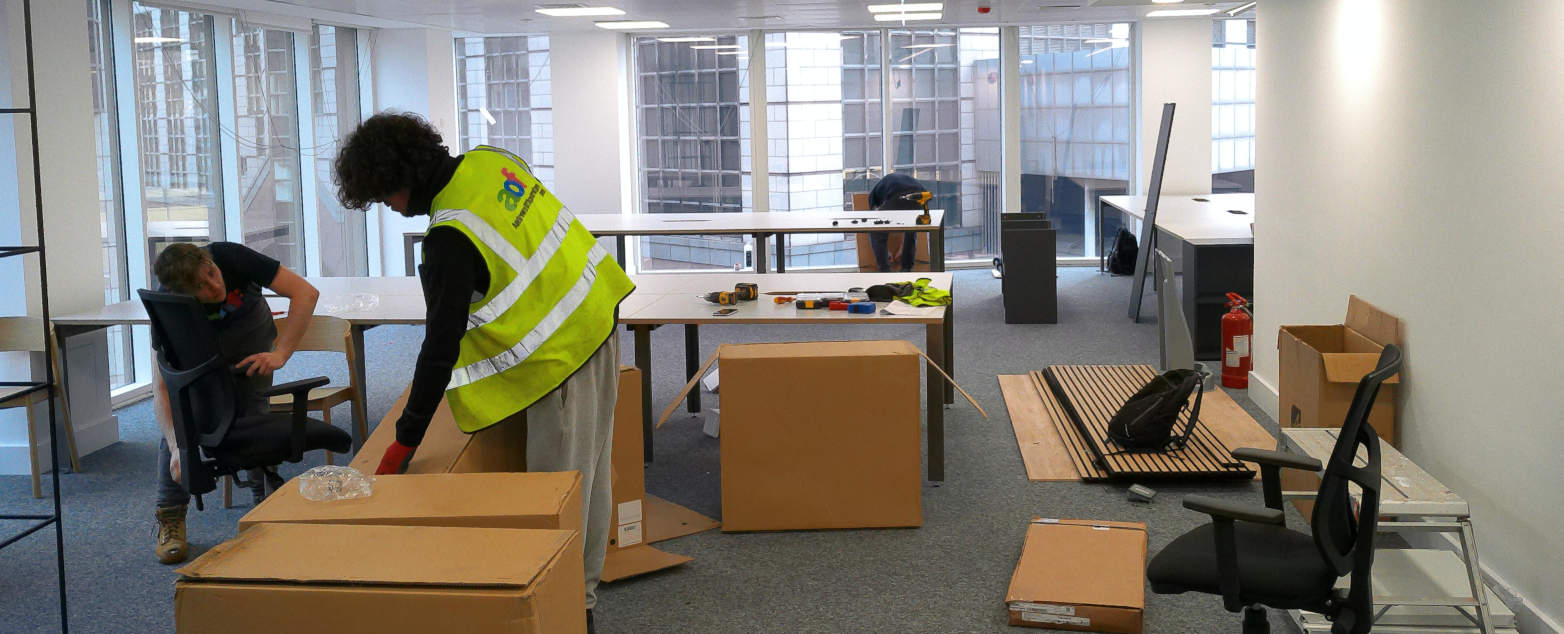
At Andrews Office Furniture, our own delivery and installation teams can bring furniture into the workplace, assemble it and position it so it's ready for use. For businesses working to a tight office-move schedule, that can remove a considerable amount of disruption.
When comparing fit-out costs, make sure you're comparing the finished result rather than just the price printed next to each product.
What Would We Prioritise for a 20-Person Office?
Every workplace is different, so there isn't one shopping list we'd recommend universally.
However, the thought process would normally look something like this.
Start with enough commercial-quality workstations for the employees who genuinely need them, while allowing sensibly for near-term growth.
Put a meaningful proportion of the budget into supportive office seating.
Add only the storage the business actually uses.
Create meeting space based on typical meeting sizes rather than assumptions about what an office should contain.
Then consider screens, monitor arms, cable management and other accessories that improve how those workstations function.
If the budget doesn't stretch comfortably across everything, look at where high-quality second-hand commercial furniture could reduce the cost without reducing the standard of the workplace.
You don't have to save money everywhere.
You need to save it in the right places.
Final Thoughts
Furnishing an office for 20 people isn't really about buying twenty of anything.
It's about creating a workplace that supports the people using it now while leaving enough flexibility for what happens next.
Start with the space and the business rather than the furniture catalogue. Invest properly in the desks and chairs employees use throughout the day. Question whether you really need every cupboard, meeting table or decorative item on the initial wish list.
And don't assume your choice is simply between expensive new furniture and cheap alternatives.
High-quality second-hand commercial furniture can allow you to spend less in some areas while protecting the budget for the things that matter most.
At Andrews Office Furniture, that's how we'd approach the project.
Don't ask how much furniture you can get for the budget. Ask how much of the right furniture the office actually needs.
That's usually where a better fit-out begins.