





The False Economy of Flat-Pack Furniture: Why Second-Hand Bench Desks Can Be the Smarter Investment
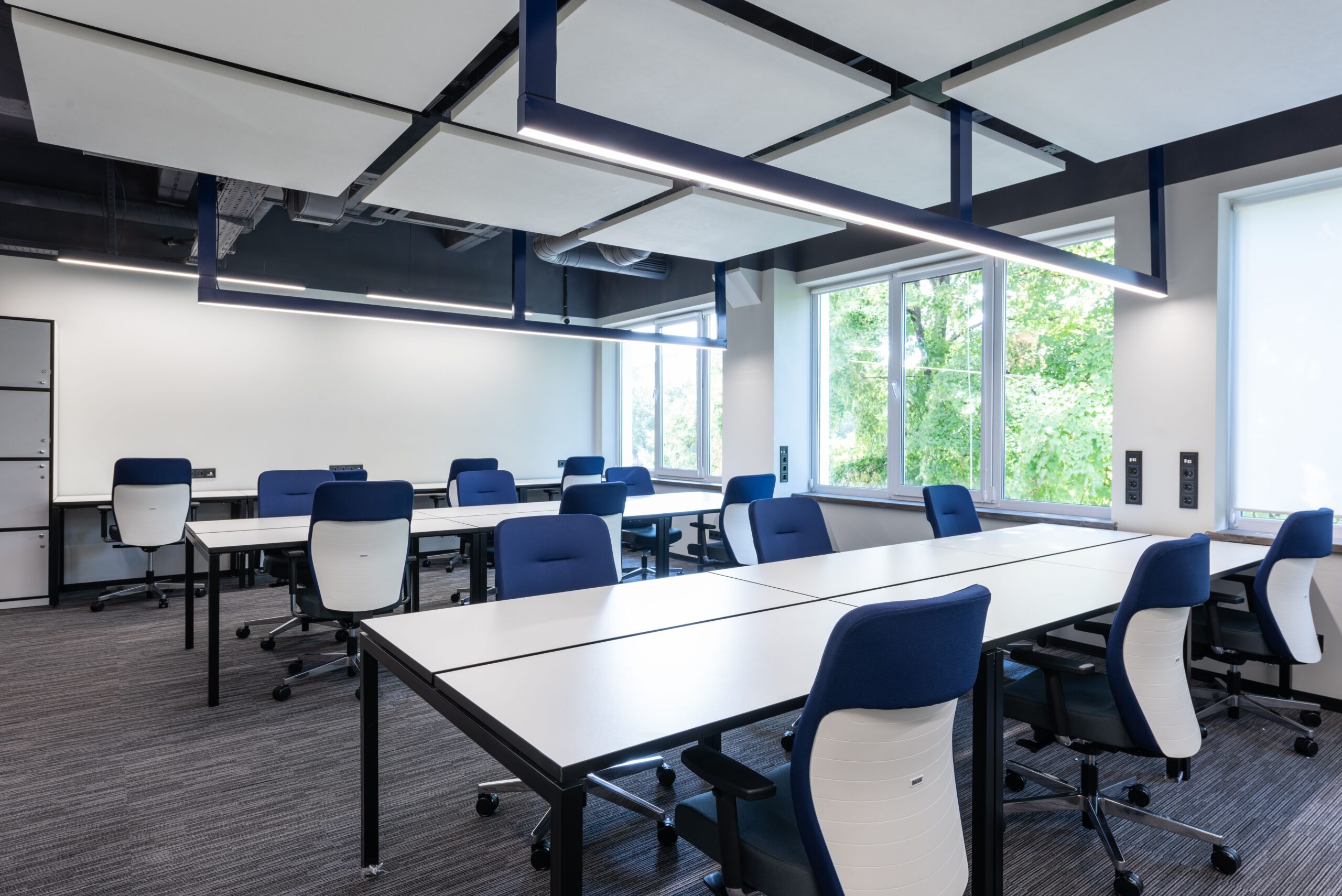
When you’re furnishing an office on a tight budget, the cheapest desk can look like the most sensible choice.
After all, if one desk costs considerably less than another and they both provide somewhere to put a computer, why spend more?
The answer often becomes apparent several months down the line.
Furniture designed primarily for occasional or domestic use doesn’t necessarily face the same demands as furniture in a busy commercial workplace. An office desk might support multiple monitors, laptops and other equipment for eight or more hours every working day. Employees move it, lean against it and adjust equipment around it. As the business grows, the desk may even move around the office several times.
That’s when the difference between cheap furniture and good-value furniture starts to matter.
At Andrews Office Furniture, we’ve worked with commercial office furniture for decades. One thing that experience has taught us is that the lowest purchase price doesn’t always produce the lowest long-term cost.
For businesses trying to control their furniture budget, high-quality second-hand bench desks can offer a much better alternative.
Why Cheap Office Furniture Can Become Expensive
The attraction of low-cost flat-pack furniture is easy to understand.
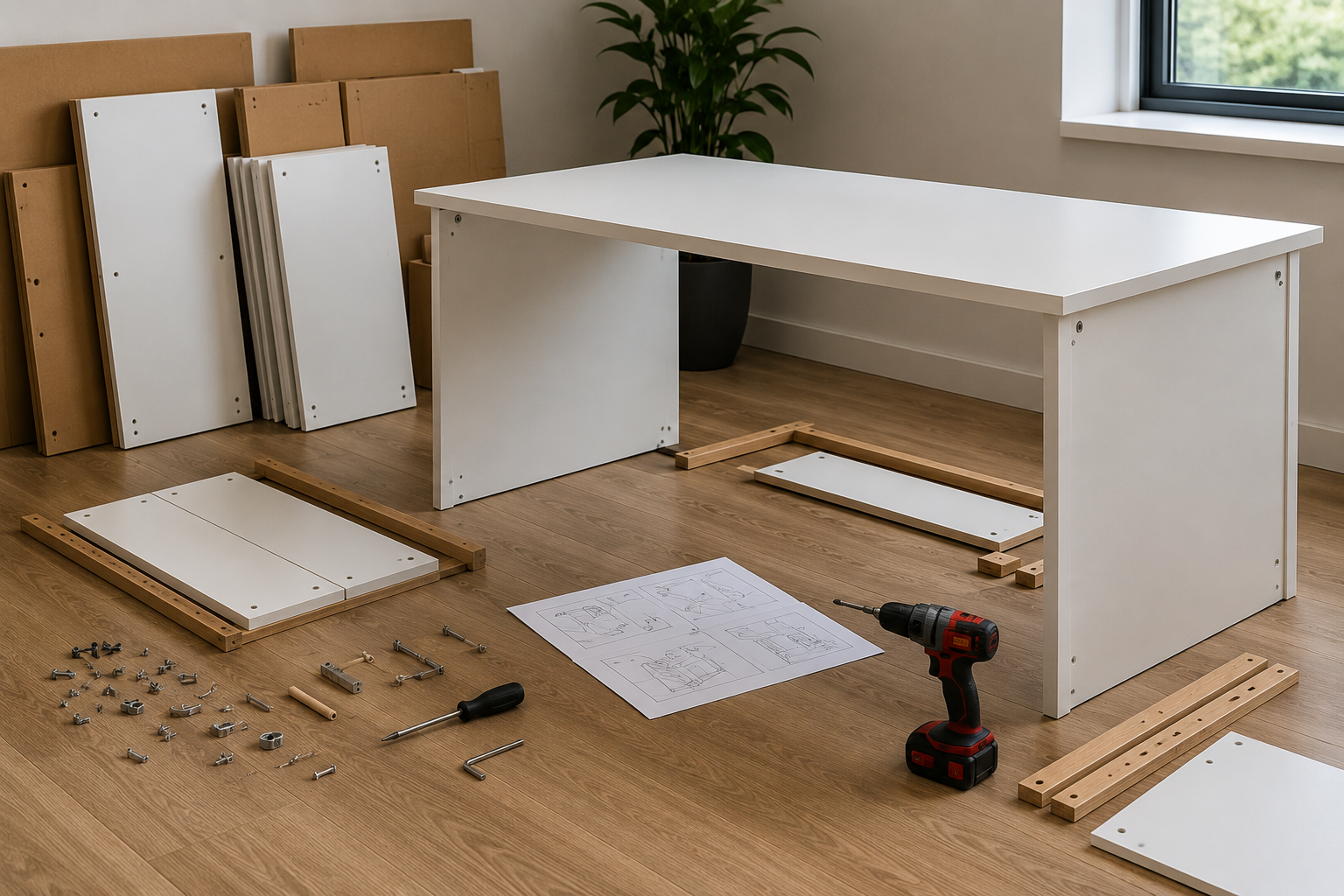
When you’re furnishing ten, twenty or fifty workstations, even a relatively small saving on each desk quickly becomes a substantial difference in the initial quote.
For a startup or growing business, that matters.
However, purchase price only tells you what furniture costs on the day you buy it. It doesn’t tell you what it will cost throughout its working life.
If a desk starts becoming unstable, its edging deteriorates or its fixings no longer hold securely, the business eventually has to repair or replace it. Someone also needs to dismantle the old furniture, dispose of it, order replacements and install everything again.
Suddenly, that inexpensive desk doesn’t look quite so inexpensive.
This is the false economy businesses need to consider.
Instead of asking, “What’s the cheapest desk we can buy?”, a better question is:
“Which desk gives us the best value over the years we expect to use it?”.
Residential and Commercial Furniture Have Different Jobs
A desk doesn’t automatically become commercial-grade simply because someone puts it in an office.
Manufacturers design furniture for different environments and levels of use.
A desk intended for a spare bedroom might provide an excellent solution for someone working from home a few days each week. Put the same type of furniture into a busy office, however, and you’re asking it to perform a very different job.
Commercial desks need to cope with intensive daily use.
Manufacturers typically build quality commercial bench desking around strong frames, durable work surfaces and components designed to withstand the demands of a workplace. Bench systems also need enough structural integrity to support several connected workstations while remaining stable.
That difference in construction becomes particularly important over time.
A desk can look perfectly good when it first comes out of the box. The real test is whether it still feels solid after years of daily use.
Why Second-Hand Bench Desks Change the Equation
This is where the second-hand commercial furniture market becomes particularly interesting.
A business choosing between a brand-new budget desk and a second-hand commercial desk isn’t necessarily comparing an inferior used product with a superior new one.
Quite often, it’s comparing two completely different grades of furniture.
High-quality second-hand bench desks may originally have been specified for corporate offices where durability, stability and long-term performance mattered. A company may then replace them because it relocates, changes its interior design or adopts a different workplace layout — not because the desks have reached the end of their useful lives.
As a result, businesses can access commercial-grade furniture for considerably less than the equivalent cost when new.
For a growing company, that creates an attractive middle ground: commercial quality without the new-furniture price tag.
What Makes a Good Bench Desk Built to Last?
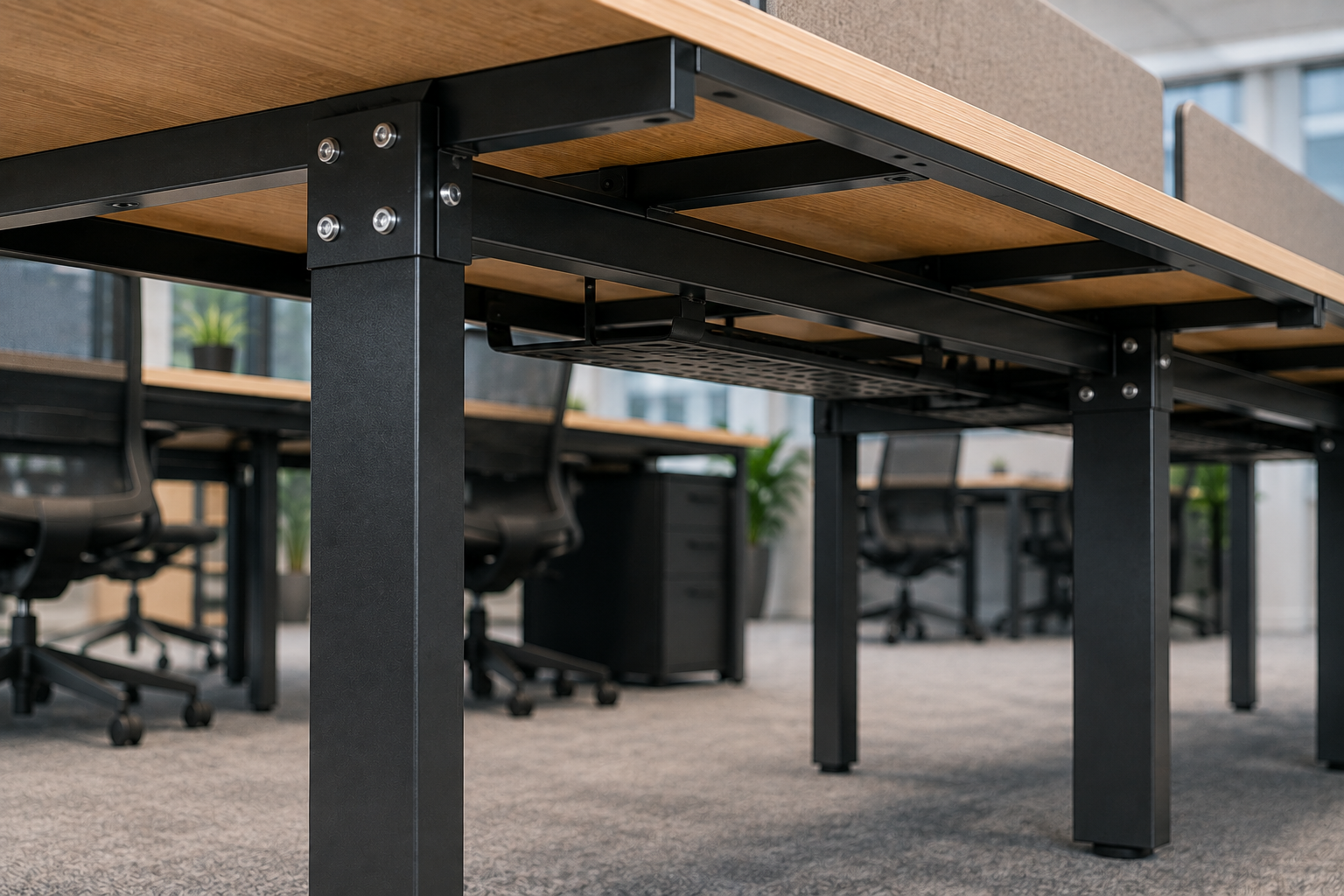
The first place we’d look is underneath the desktop.
It’s easy to focus on colour and finish when comparing desks, but the frame tells you much more about the furniture’s long-term quality.
A good commercial bench desk should feel rigid and stable. Strong metal frames, secure connections and properly supported worktops help the workstation withstand years of everyday use.
Then look at the work surface itself.
Commercial-grade desktops should have durable finishes and robust edging that can cope with the knocks, cleaning and general wear associated with a working office.
Finally, look at the complete system.
One of the advantages of commercial bench desking is that manufacturers design it as a workplace solution rather than a collection of individual tables. Cable management, screens, monitor arms and other accessories can often integrate neatly into the workstation.
That makes a significant difference when you’re creating an organised office for an entire team.
Bench Desking Also Makes Better Use of Space
Durability isn’t the only reason businesses choose bench desks.
They can also make extremely efficient use of available floor space.
Instead of treating every employee’s workstation as an individual piece of furniture, bench desking groups multiple positions around a shared structure. This can create a cleaner, more consistent layout while helping businesses accommodate teams efficiently.
For growing companies, that flexibility matters.
You may start with six employees in one area and need space for ten a year later. A well-planned commercial bench system gives you more scope to create an organised workspace that can evolve with the business.
It also produces a more professional appearance.
Matching desks arranged consistently across an office create a very different impression from a collection of individual flat-pack tables purchased at different stages of the company’s growth.
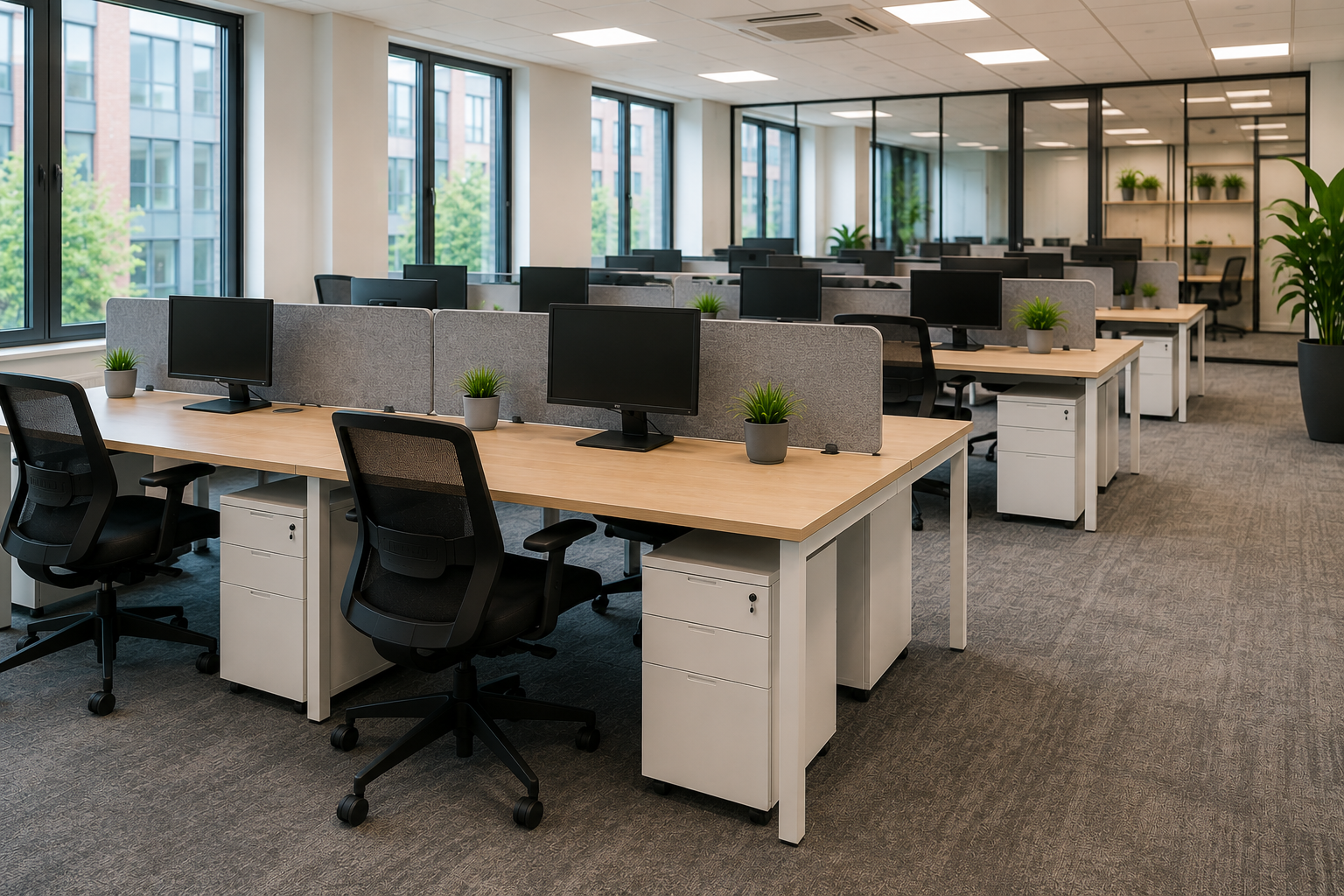
Second-Hand Doesn’t Mean Worn Out
This is probably the biggest misconception surrounding used office furniture.
Second-hand doesn’t automatically mean furniture has reached the end of its life.
In commercial environments, companies replace furniture for all sorts of reasons. Businesses relocate. Leases end. Organisations merge. Interior designs change. Companies reduce office space or move towards hybrid working.
Perfectly serviceable commercial furniture can become surplus simply because the previous owner no longer needs it.
That’s why condition matters more than age.
At Andrews Office Furniture, we look at the construction, stability and overall condition of second-hand office furniture before offering it for continued commercial use.
A few minor cosmetic marks tell you very little about how a desk will perform. A solid commercial frame and a sound worktop tell you considerably more.
Don’t Forget the Cost of Replacement
There’s another part of the calculation businesses often overlook.
Replacing office furniture involves more than buying another desk.
Someone has to identify the replacement, arrange delivery, remove the existing furniture and build the new workstation. If several desks fail or deteriorate at different times, that disruption can repeat itself throughout the year.
There’s also the question of disposal.
Low-cost furniture that can’t withstand sustained commercial use eventually has to go somewhere. Replacing products more frequently creates additional waste as well as additional expense.
By extending the working life of existing commercial furniture, second-hand bench desking offers another advantage: you’re making use of a product that has already been manufactured and still has useful life remaining.
It’s better resource management as well as better purchasing.
Buy for the Office You’re Building, Not Just Today’s Budget
Keeping costs under control is important for every business, particularly during periods of growth.
But reducing costs and buying the cheapest available product aren’t the same thing.
Sometimes spending slightly more on the right furniture — or buying a much higher grade of furniture second-hand — creates better value over the long term.
That’s especially true with office desks.
Your team will use them every working day. They’ll support expensive computer equipment, shape the layout of your office and form a large part of what employees and visitors see when they enter the workplace.
They need to do more than survive assembly.
They need to keep doing their job year after year.

Final Thoughts
There’s nothing inherently wrong with flat-pack furniture. In the right environment and for the right level of use, it can provide a perfectly practical solution.
Problems arise when businesses choose furniture designed for one purpose and expect it to perform another.
A busy commercial office places very different demands on a desk from a spare bedroom or occasional home workspace. That’s why looking beyond the initial price matters.
High-quality second-hand bench desks give businesses another option. They provide access to furniture originally designed for demanding commercial environments while avoiding the cost of buying the same level of quality brand new.
At Andrews Office Furniture, we’ve always believed value comes from buying furniture that suits the job it’s expected to do.
Because the cheapest desk isn’t necessarily the one with the lowest price.
It’s the one you don’t have to keep replacing.