





How Long Should Commercial Office Furniture Actually Last?
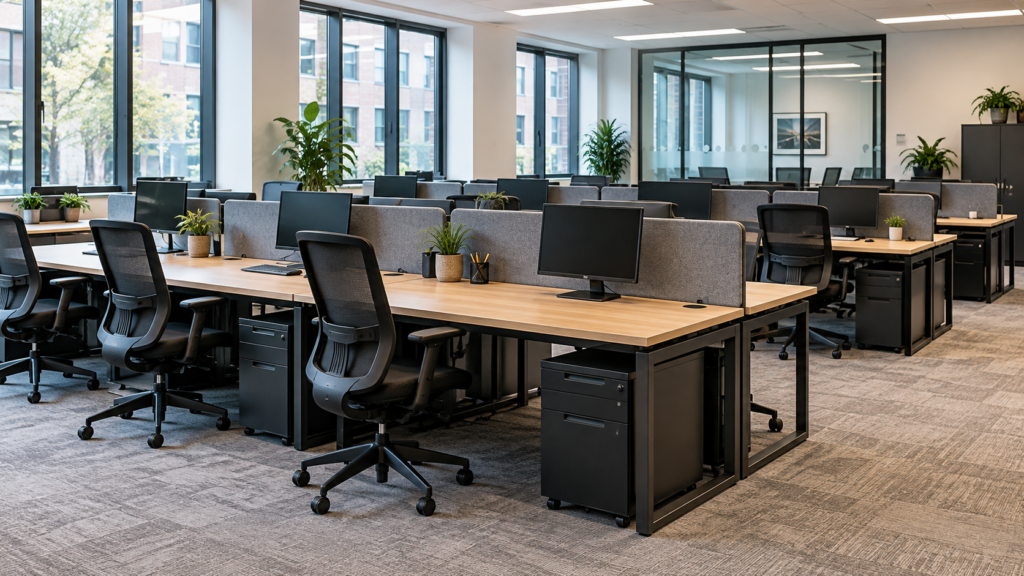
How old is too old for office furniture?
It's a question without a particularly useful answer.
A desk that's ten years old might still have years of working life ahead of it. Meanwhile, a much newer desk could already be unstable, damaged or unsuitable for the demands of a busy workplace.
That's because age alone tells us surprisingly little about commercial office furniture.
What matters more is how the furniture was built, how intensively it has been used and what has happened to it during its working life.
At Andrews Office Furniture, we've spent decades handling office furniture in every imaginable condition. We've seen older commercial desks that remain remarkably solid and much newer furniture that hasn't stood up nearly as well.
So, rather than asking how many years office furniture should last, there's a better question to ask:
How do you know when office furniture has actually reached the end of its useful life?
The answer starts with understanding what it was designed to do.
Commercial Furniture Is Built for a Different Job
Not all furniture faces the same demands.
A desk in a spare bedroom might be used for a few hours each week. A commercial workstation can be in use throughout every working day.
That difference matters.
Commercial office furniture needs to cope with computer equipment, monitors, storage and constant daily use. Desks may be dismantled and rebuilt as offices move. Chairs need to withstand repeated adjustments and movement. Storage drawers can be opened thousands of times during their working lives.
Quality commercial furniture is designed with that environment in mind.
That often means stronger frames, more substantial fixings, durable worktops and components designed for repeated use.
As a result, a good commercial desk doesn't suddenly become unsuitable because it has reached a particular birthday.
If the structure remains sound, it can continue doing exactly what it was designed to do.
What Determines How Long an Office Desk Lasts?
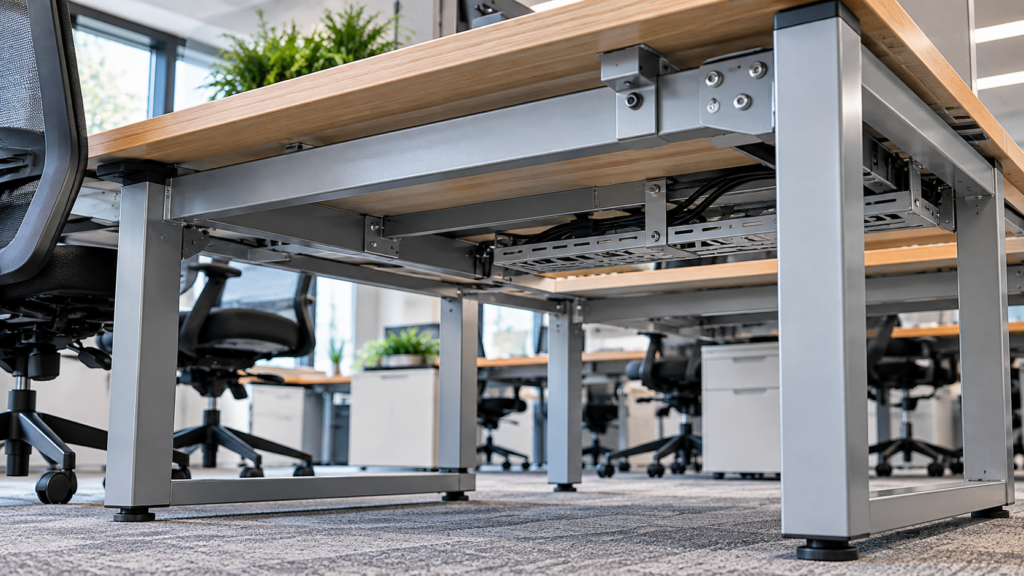
With office desks, we'd look at the structure before worrying too much about age.
The frame is a good place to start.
Does the desk remain rigid when pressure is applied? Are the legs secure? Have any joints started moving? Are the fixing points still in good condition?
A well-made steel-framed commercial desk can remain extremely robust after years of use.
The worktop also matters, although cosmetic appearance and structural condition shouldn't be confused.
Small scratches, marks or minor edge wear may affect how a desk looks, but they don't necessarily affect how it performs.
More significant problems deserve attention. A badly damaged worktop, weakened fixing points or a frame that no longer remains stable can indicate that the desk is approaching the end of its practical life.
That's why inspecting used desks properly matters.
Andrews Insight:
When assessing a commercial desk, we'd rather see a few cosmetic marks on a strong, stable frame than a pristine-looking worktop sitting on a lightweight structure that moves every time you lean against it.
Appearance can be improved or accepted.
Poor construction is much harder to overcome.
Office Chairs Wear Differently From Desks
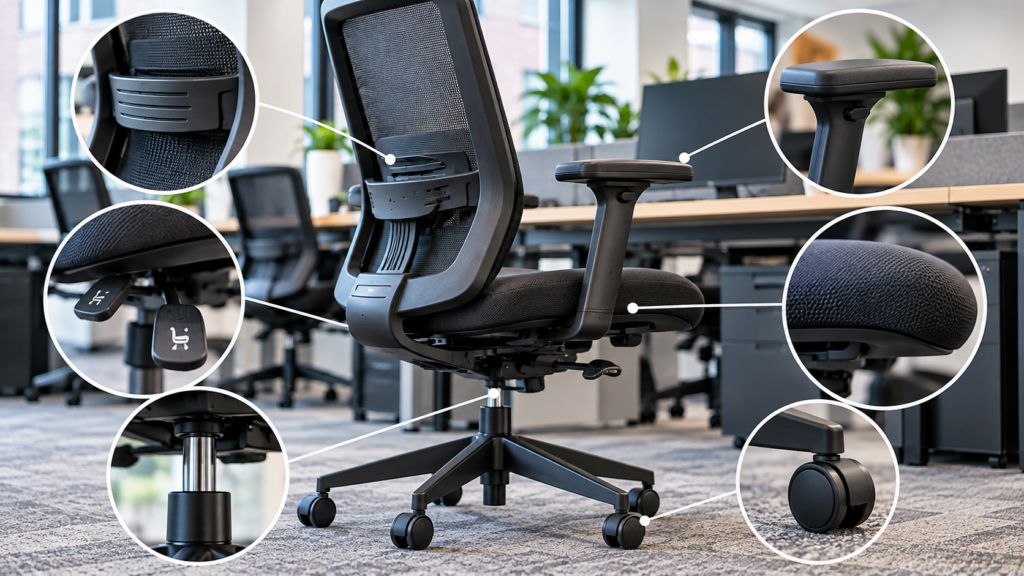
Office chairs have a more complicated working life. Unlike a desk, a chair contains several components that move throughout the day.
Castors roll. Gas lifts move. Arms adjust. Tilt mechanisms operate. Fabrics and foams support the user for hours at a time.
That means different parts can wear at different rates.
A chair may still look presentable while its seat foam has lost support. Another might remain perfectly comfortable but need replacement castors. A gas lift or arm pad can sometimes be replaced without retiring the entire chair.
This is why assigning every office chair a fixed lifespan isn't particularly helpful.
Instead, look at how it performs.
Does it still provide appropriate support? Do the adjustments work properly? Is the mechanism secure? Does the chair feel stable? Is the upholstery still suitable for a professional environment?
If the answer is yes, age alone isn't a reason to replace it.
If important components have deteriorated to the point that comfort, usability or safety is affected, then replacement—or sensible refurbishment—becomes worth considering.
Storage Can Outlive the Office Around It
Pedestals, filing cabinets and cupboards are often among the longest-serving pieces of furniture in an office.
There's a simple reason.
Good commercial storage tends to be relatively straightforward.
A steel filing cabinet doesn't need to follow changing technology. A pedestal doesn't become obsolete because a business changes its computer systems.
Instead, the main wear tends to occur around moving components.
Drawers, runners, locks, handles and hinges deserve attention. With tall storage, overall stability is particularly important.
If those components remain in good working order and the structure is sound, commercial storage can continue to perform its job for a very long time.
In fact, businesses sometimes replace storage for reasons that have nothing to do with its condition.
A company moving towards digital records may simply need fewer filing cabinets. Another might redesign an office and remove tall storage to create a more open layout.
The furniture hasn't necessarily failed.
The workplace has changed around it.
Meeting Tables Can Have Surprisingly Long Lives
Meeting and boardroom tables are another interesting example.
They're often substantial pieces of commercial furniture, but they may experience less intensive use than individual workstations.
As a result, a quality meeting table can remain serviceable long after a business decides to replace it.
Again, the frame and connection points tell us more than the age.
If a table remains stable, its surface is in reasonable condition and it can be dismantled and rebuilt correctly, there's little reason why a change of ownership should prevent it from continuing to work.
This is one reason corporate office clearances can produce some excellent second-hand furniture.
A business may change its meeting rooms because of a refurbishment, relocation or new design scheme—not because its existing tables have worn out.
Moving Furniture Can Affect Its Lifespan
Furniture doesn't only experience wear while people are using it.
What happens during an office move matters too.
Commercial desks are often designed so they can be dismantled, moved and rebuilt. However, repeated poor handling can damage even good furniture.
Fixings can disappear. Threads can become damaged. Components can be forced apart incorrectly. Worktops can suffer damage during transport.
The way furniture is dismantled and reassembled therefore matters.
This is one of the less obvious differences between simply buying a piece of used furniture and having commercial furniture professionally supplied and installed.
The product needs to arrive with the right components, and it needs to be put back together correctly.
A strong desk assembled badly can still become an unstable desk.

Cosmetic Wear Isn't the Same as the End of Useful Life
This distinction is particularly important when considering second-hand furniture.
Commercial furniture works for a living.
Eventually, it will show some evidence of that.
A small mark on a desk edge or a minor scratch on a pedestal doesn't automatically mean the product needs replacing.
Businesses need to decide what level of cosmetic wear is acceptable for their particular workplace.
A client-facing boardroom may demand a different cosmetic standard from a back-office workstation. A startup might happily accept minor marks if doing so allows it to buy substantially better furniture within its budget.
Neither approach is wrong.
The important thing is to separate appearance from performance.
A cosmetic imperfection can often be seen immediately.
Structural quality reveals itself over time.
So, When Should Office Furniture Actually Be Replaced?
Rather than looking at a calendar, we'd look for evidence that the furniture can no longer perform its job properly.
Structural instability is an obvious warning sign. A desk that rocks because of damaged fixings or a compromised frame needs attention.
Safety also comes first. Damaged components, sharp edges, unstable storage or faulty chair mechanisms shouldn't be ignored.
Comfort matters too, particularly with seating. If a chair no longer provides appropriate support and the worn components can't sensibly be replaced, keeping it simply because it still looks reasonable doesn't make much sense.
Then there's suitability.
Sometimes perfectly functional furniture has reached the end of its life in that particular office, even though the furniture itself still has plenty of life left.
A company may need larger workstations, smaller workstations, height-adjustable desks or a completely different layout.
That doesn't necessarily mean the existing furniture should be thrown away.
It may simply be ready for its next workplace.
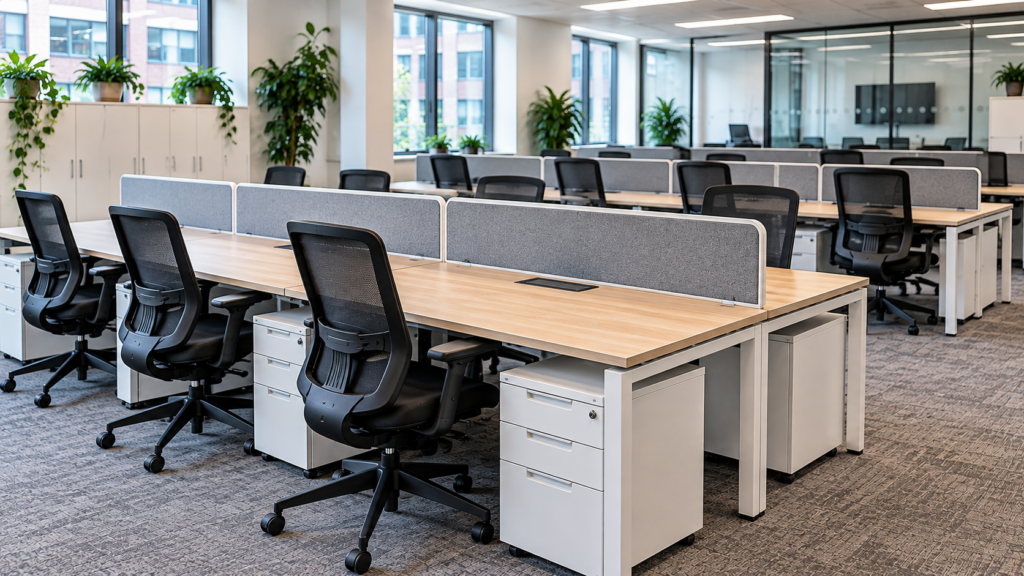
Can Second-Hand Office Furniture Really Have Years of Life Left?
Absolutely—provided you're buying the right furniture.
This is where the original quality of the product becomes so important.
A commercial desk may enter the second-hand market because a company has relocated, downsized or refurbished. None of those events tells us that the desk has reached the end of its working life.
In many cases, the opposite is true.
The furniture may have been designed to cope with years of intensive commercial use and still be structurally excellent when its first owner no longer needs it.
That's why buying second-hand shouldn't simply be viewed as buying older furniture.
You're buying furniture at a different point in its working life.
The important question is how much useful life remains.
And you determine that by inspecting the product—not counting candles on its birthday cake.
Longevity Changes the Cost Calculation
How long furniture lasts also changes what "cheap" really means.
Imagine a business chooses a low-cost desk because it saves money at the point of purchase.
If that desk needs replacing much sooner than a better-built alternative, the business doesn't just pay for another desk.
There's another purchasing decision, another delivery and potentially another round of disruption.
Now compare that with a well-made commercial desk that continues performing reliably year after year.
Even if the initial price was higher, its cost per year of useful service may be considerably lower.
This is also why second-hand commercial furniture can represent such good value.
You're potentially combining the build quality of commercial furniture with a lower acquisition cost because another business has already owned it.
That's a very different proposition from simply buying the cheapest furniture available.
Final Thoughts
So, how long should commercial office furniture actually last?
As long as it remains safe, structurally sound, comfortable where appropriate and suitable for the job it's being asked to do.
A number on a calendar can't tell you that.
The original quality of the furniture, how it has been used, how it has been maintained and how it has been handled during moves all influence its working life.
At Andrews Office Furniture, we'd always rather assess the furniture in front of us than make assumptions based on its age.
That's particularly important when buying second-hand. A desk may already have spent years in another workplace and still offer years of reliable service in its next one.
Good commercial furniture doesn't expire. Eventually, it simply reaches the point where it can no longer do its job properly.
Until then, there may be plenty of work left in it.