





Planning an Office Fit-Out? 10 Things to Consider Before Buying Furniture
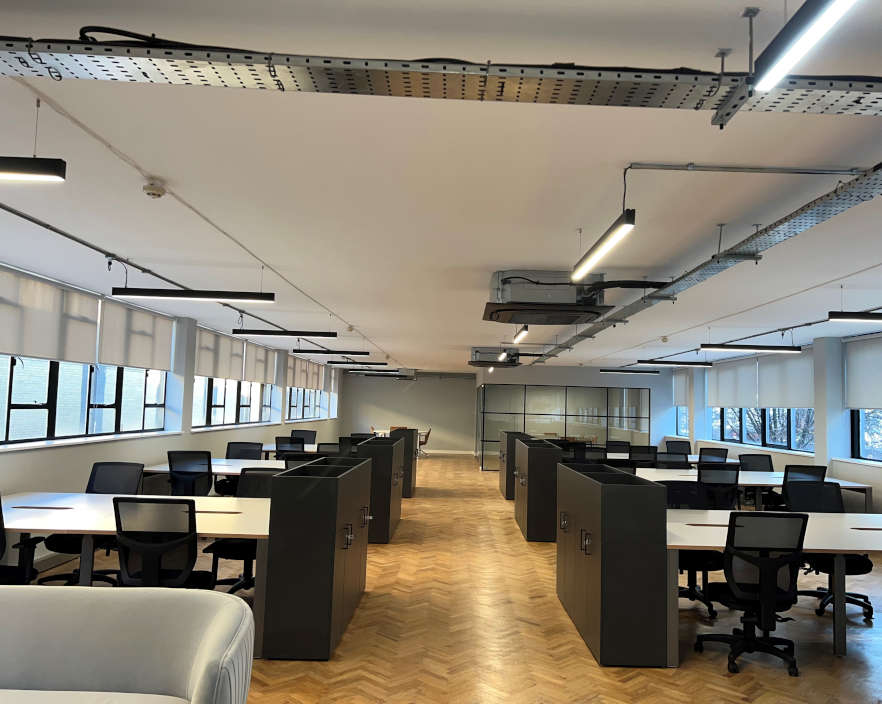
An empty office can make furnishing a workplace look surprisingly straightforward.
Choose some desks, order enough chairs, add a meeting table and arrange delivery. Job done.
Except anyone who's been involved in an office move or refurbishment will know there's usually more to it than that.
Desks need to fit the space. Employees need room to move comfortably. Power and data points need to be accessible. Furniture needs to arrive at the right time, and somebody needs to assemble it before the team can start working.
Get those details wrong, and even good-quality furniture can become an expensive inconvenience.
At Andrews Office Furniture, we've spent decades supplying and installing commercial furniture for businesses across London and the South East. One thing we've learned is that successful office fit-out planning starts well before anyone chooses a desk finish.
The aim isn't simply to fill an office with furniture.
It's to create a workplace that functions properly from the first day.
Here are ten things we'd recommend considering before placing your first order.
1. Start With How the Office Will Actually Be Used
Before looking at furniture, think about the people who'll use it.
How many employees work in the office each day? Do they have permanent desks, or does the business operate a hybrid working arrangement?
Do teams need to sit together? Are employees regularly making telephone calls or holding video meetings? Do people need quiet areas for concentrated work?
These questions influence the furniture you'll need.
For example, a company with thirty employees might not require thirty permanent workstations if attendance varies throughout the week.
On the other hand, a business with twenty employees who all attend daily may need dedicated desks, additional meeting space and room for future recruitment.
The best office layout starts with understanding how people work, rather than assuming every workplace needs the same furniture.
2. Measure the Space Before Choosing Desks
A desk might look perfect in a showroom or product photograph.
That doesn't mean it will work in your office.
Before ordering, check the room dimensions, doorways, windows, columns, radiators and other fixed features.
Then consider how people will move around the space.
Employees need room to pull out their chairs, access storage and move between workstations without constantly disturbing colleagues.
It's also important to consider accessible routes and the relevant workplace requirements. These can influence how much usable space you actually have.
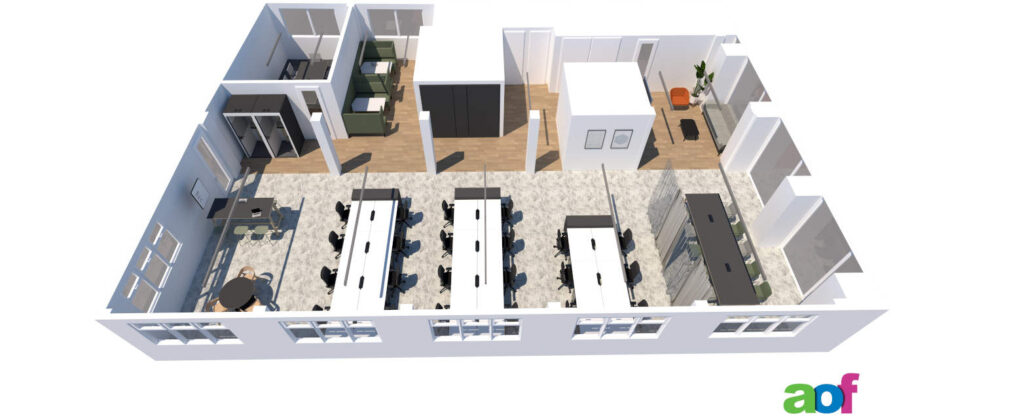
A floor plan is particularly helpful here.
Even a relatively simple layout can reveal problems that aren't obvious when standing in an empty room.
Andrews Insight: A desk that fits on a floor plan doesn't necessarily create a usable workstation. You also need to account for the person sitting at it, their chair and the space around them.
3. Choose Furniture That Suits the Job
Not every office desk needs to be identical.
Some employees work with a laptop and one monitor. Others need multiple screens, additional equipment or more surface space.
The same applies to seating.
An office chair used throughout an eight-hour working day needs different consideration from a meeting chair used occasionally.
This is why we'd always recommend choosing commercial-grade furniture suited to the demands of the workplace.
Look at desk construction, stability, worktop dimensions and cable management.
For chairs, consider adjustability, support and suitability for the user.
Storage should also reflect what employees actually need rather than what traditionally appears in an office.
Buying furniture that's fit for purpose is usually a better investment than choosing everything based on appearance or the lowest available price.
4. Think About Power, Data and Cable Management
Cable management might not be the most exciting part of an office fit-out.
However, it's one of the details that can make a completed workplace feel either organised or frustrating.
Before deciding where desks will go, establish where the power and data connections are located.
Will employees need floor boxes, wall sockets or desk-mounted power modules?
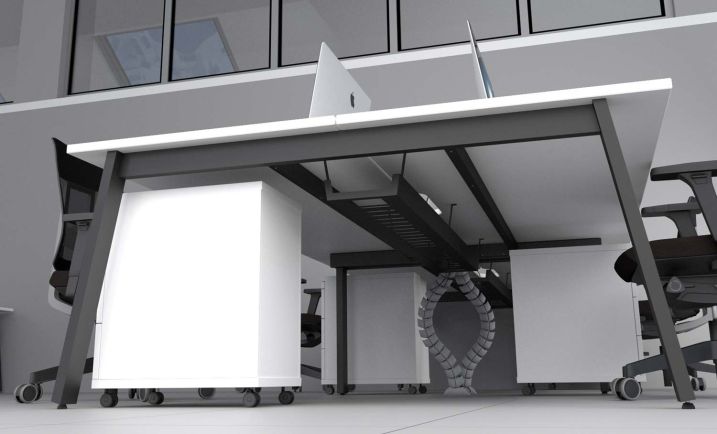
Can cables run neatly underneath the workstations?
Will monitor arms or desk screens affect how equipment needs to be positioned?
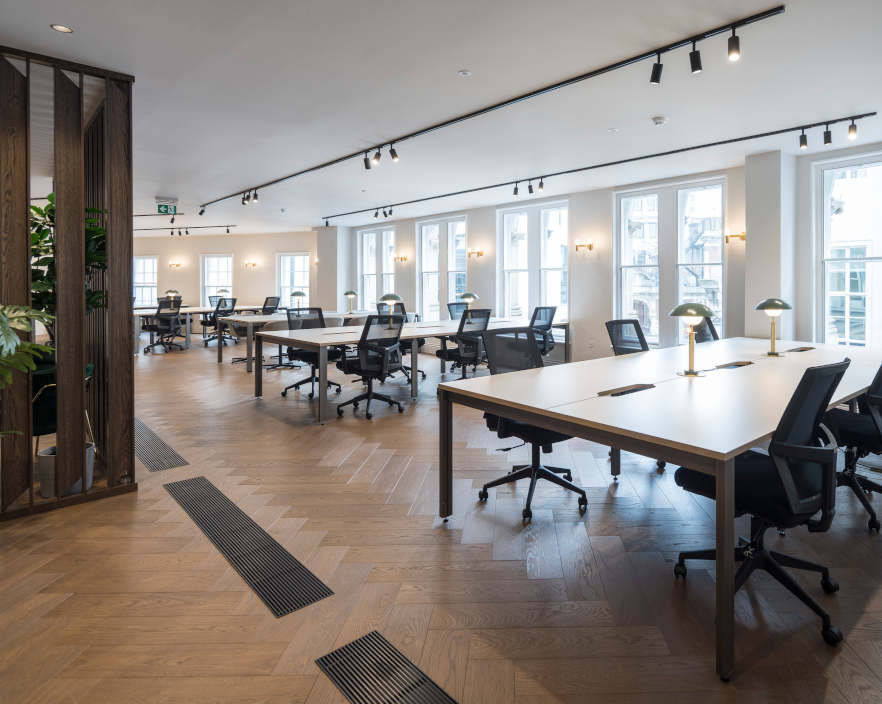
Bench desking can be particularly useful because many commercial systems incorporate cable trays and shared cable management.
However, the layout still needs to work with the building's electrical infrastructure.
It's much easier to plan these details before the furniture arrives than to discover afterwards that half the desks are too far from the available connections.
Any electrical alterations should be handled by appropriately qualified professionals.
5. Set a Budget for the Complete Fit-Out
It's easy to underestimate the cost of furnishing an office when you're only looking at individual product prices.
Twenty desks at one price and twenty chairs at another might appear to give you a straightforward budget.
But what about pedestals, monitor arms, desk screens, meeting furniture and storage?
Then there's delivery, assembly and installation.
If the office already contains furniture, you may also need to arrange its removal.
That's why we'd recommend budgeting for the complete project rather than simply adding together the cost of the main furniture items.
It's also worth keeping some flexibility for unexpected requirements.
Perhaps the final layout needs additional cable management, or a meeting room requires different furniture from the original plan.
A realistic budget accounts for these possibilities before they become last-minute expenses.
6. Decide Where New and Second-Hand Furniture Make Sense
An office fit-out doesn't need to be entirely new or entirely second-hand.
In fact, combining the two can be an effective way to control costs without compromising the finished workplace.
For example, a business might choose high-quality second-hand commercial desks and storage while investing in new ergonomic seating.
Alternatively, second-hand bench desking could provide a consistent workstation layout at a lower initial cost than a comparable new system.
The important thing is to assess quality, condition and suitability.
A well-built commercial desk doesn't suddenly become unsuitable because another company has used it before.
Equally, buying new may be preferable when you need a particular specification, finish or quantity that isn't available second-hand.
The right approach depends on the business, the budget and the furniture itself.
Our Complete Guide to Buying Second-Hand Office Furniture explores these considerations in greater detail.
7. Allow for Future Changes
Businesses rarely stay exactly the same size forever.
Teams grow, departments change and working arrangements evolve.
That's why an office layout should have some flexibility.
If you're planning twenty workstations today, consider whether you'll need another four or five in the near future.
Could additional desks fit without redesigning the entire room?
Would a bench system allow you to extend the layout?
Could a collaboration area become additional workstation space if necessary?
There is a balance to strike.
You don't want to fill an office with furniture for employees who haven't been recruited yet.
However, choosing a layout that cannot accommodate realistic growth may create unnecessary costs later.
A little forward planning can make the workplace easier to adapt.
8. Don't Overlook Meeting Rooms and Storage
Workstations often receive most of the attention during an office fit-out.
But the shared areas matter too.
Before ordering a large boardroom table, consider how meetings actually happen.
If most discussions involve four people, a smaller meeting area might be more useful than a twelve-person boardroom that rarely reaches capacity.
The same principle applies to storage.
Does the business still use large quantities of paper files? Do employees need personal pedestals? Would lockers suit a hybrid working arrangement better?
Furniture should solve a genuine workplace requirement.
Otherwise, you're spending money on products that occupy valuable floor space without contributing much to the working day.
In some cases, leaving an area open and flexible can be more useful than furnishing every available corner.
9. Plan Delivery and Installation Before the Move
This is one of the most important considerations, yet businesses sometimes leave it until the last minute.
Ordering furniture and getting an office ready for employees are two different things.
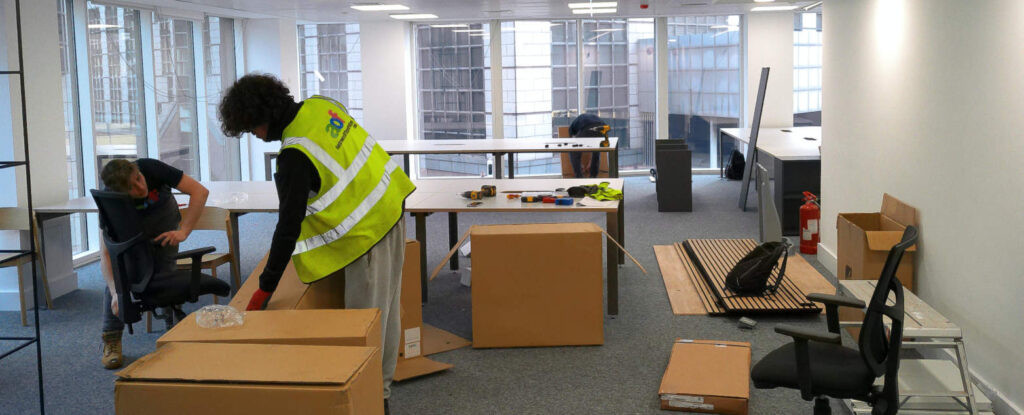
Commercial desks can arrive in several components. Bench systems may require frames, beams, worktops and screens to be assembled in the correct sequence.
Storage can be heavy, and larger meeting tables may require specialist handling.
Then there are the building logistics.
Is there a suitable loading area?
Does the building have a goods lift?
Are deliveries restricted to certain hours?
Will the furniture fit through the available access routes?
Does the building manager require advance notice?
These details can affect how smoothly the installation proceeds.
At Andrews Office Furniture, our delivery and installation teams help businesses get their furniture into position and assembled ready for use.
For a company working towards a fixed move-in date, planning this stage properly can prevent considerable disruption.
Delivery isn't the same as a completed office installation. Make sure you know exactly what's included before placing an order.
10. Check Everything Before Employees Arrive
The final stage of an office fit-out shouldn't be watching the delivery vehicle leave.
It should be checking that the workplace is ready.
Are the desks stable and correctly positioned?
Do the chairs operate properly?
Can employees access the storage they need?
Are workstations positioned sensibly around the available power and data connections?
Is there enough room to move between furniture?
Have packaging materials and unnecessary components been cleared away?
It's also worth checking that the finished layout matches the original plan.
Small adjustments are often easier to make before employees arrive with their equipment and personal belongings.
Where required, workplace safety and ergonomic assessments should also take place before regular use begins.
A final walkthrough helps identify problems while there's still time to address them.
Good Office Fit-Out Planning Saves More Than Money
It's tempting to judge an office fit-out by how much the furniture costs.
However, the real value of good planning goes further.
A well-considered layout can make better use of the available space. Appropriate furniture supports employees throughout the working day. Sensible cable management keeps workstations organised.
And coordinating delivery and installation helps reduce disruption when the business moves into its new workplace.
None of those benefits necessarily requires the most expensive furniture.
They require the right decisions at the right stage.
At Andrews Office Furniture, we'd always encourage businesses to think about the finished workplace before choosing individual products.
Because the goal isn't simply to buy furniture.
It's to create an office that works.
Final Thoughts
A successful office fit-out begins long before the first desk arrives.
Understanding how employees work, measuring the space properly and choosing suitable commercial furniture all help avoid unnecessary costs.
So does thinking ahead about power, storage, meeting areas, future growth and installation.
For some businesses, new furniture will be the right choice. For others, high-quality second-hand furniture can make the available budget go considerably further.
Most workplaces benefit from a thoughtful combination of planning, quality and practicality.
The best time to solve an office furniture problem is before the furniture arrives.
Get the planning right, and everything that follows becomes easier.