




The Complete Guide to Buying Second-Hand Office Furniture
Buying second-hand office furniture used to come with certain assumptions.
Mismatched desks. Worn chairs. Scratched filing cabinets. Furniture chosen because it was cheap rather than because it was good.
But the commercial second-hand furniture market can look very different.
Every year, businesses relocate, downsize, refurbish their offices or change the way their teams work. When they do, large quantities of high-quality commercial furniture can become available, often while it still has years of useful working life ahead of it.
For the next business, that creates an opportunity.
Second-hand office furniture can significantly reduce the cost of furnishing a workplace while giving businesses access to a standard of commercial furniture that might otherwise sit outside their budget.
However, buying second-hand well requires more than finding the lowest price.
At Andrews Office Furniture, we've spent decades supplying new and second-hand commercial furniture to businesses across London and the South East. We've seen furniture that's ready for another decade of work and furniture that we wouldn't recommend putting back into an office.
The difference isn't always obvious from a photograph.
So, what should you look for? Where does second-hand furniture actually come from? Which products make the most sense to buy used? And when might buying new be the better decision?
This guide brings all of those questions together.
What Do We Actually Mean by Second-Hand Office Furniture?
Let's start with an important distinction.
There's a considerable difference between furniture that happens to have been used in an office and used commercial office furniture.
A lightweight desk originally bought for occasional use doesn't become commercial-grade simply because a business owned it.
True commercial furniture starts with a different job in mind.
Manufacturers design commercial desks, seating and storage to cope with sustained workplace use. Desks support computer equipment throughout the working day. Chairs go through thousands of adjustments. Drawers open and close repeatedly. Furniture gets moved and office layouts change.
That usually demands stronger construction, more durable finishes and components designed for repeated use.
When high-quality commercial furniture enters the second-hand market, those characteristics don't disappear.
That's why the original quality of the product should always form part of your buying decision.
Where Does Second-Hand Office Furniture Come From?
Commercial office furniture being removed during an office clearance.
 This is one of the most common misconceptions about used furniture.
Businesses don't necessarily dispose of furniture because it has worn out.
Quite often, the furniture hasn't failed at all.
Companies relocate. Leases end. Businesses merge. Organisations downsize or expand. Interior designers introduce a new workplace scheme. Hybrid working reduces the number of permanent desks a company needs.
Imagine a company that originally furnished an office for 100 employees.
Several years later, it moves into a smaller building designed around hybrid working and only needs 60 permanent workstations.
The other 40 desks haven't suddenly become bad desks.
The company simply doesn't need them anymore.
Commercial clearances can therefore release substantial quantities of matching furniture while it remains perfectly suitable for another workplace.
That's an important reason the second-hand commercial market can offer such good value.
Want to know more? Our guide to where second-hand office furniture actually comes from explains the journey from one workplace to the next in greater detail.
How Much Can You Save by Buying Second-Hand?
For many businesses, cost is the initial reason they consider second-hand furniture.
And the savings can be significant.
The exact amount depends on the original product, condition, availability and current market, so we'd always be cautious about promising that every business will save a particular percentage.
But there's another way to think about the financial benefit.
Suppose you have a fixed budget for twenty workstations.
Buying new might mean choosing an entry-level range to stay within that budget. The second-hand market could potentially give you access to furniture that occupied a considerably higher price point when originally purchased.
So, instead of asking:
"How cheaply can we furnish the office?"
ask:
"What quality can we achieve with the money available?"
That's a much more useful calculation.
For startups in particular, reducing the initial furniture investment can leave valuable capital available for recruitment, technology and business growth.
We've explored this in more depth in The Startup Scale: How High-Quality Second-Hand Office Furniture Can Cut Fit-Out Costs.
Is Second-Hand Office Furniture Actually Good Quality?

It can be excellent.
It can also be poor.
The phrase "second-hand" tells you how many owners a piece of furniture has had. It doesn't tell you whether it was good furniture in the first place.
This is why we'd start with the original construction.
With a desk, look underneath.
Does it have a substantial commercial frame? Are the legs and crossbars secure? Does the desk remain stable when you apply gentle pressure?
Then look at the worktop.
Minor cosmetic marks aren't necessarily a problem. More serious damage around edges, fixing points or areas affected by moisture deserves greater attention.
With chairs, test the mechanisms and adjustments. Look at the condition of the seat foam, upholstery, castors, arms and gas lift.
With storage, check runners, hinges, locks and overall stability.
A few cosmetic imperfections may simply show that furniture has done some work.
Structural problems tell a very different story.
Our Built to Last guide goes much further into exactly what we'd inspect when assessing a used commercial desk.
How Long Should Second-Hand Furniture Last?
There's no sensible universal number.
A desk doesn't suddenly become unsuitable on its tenth birthday.
Furniture lifespan depends on its original quality, intensity of use, maintenance, handling and condition.
A high-quality commercial desk that's already spent several years in an office may still have a considerable working life ahead of it.
Meanwhile, a much newer product designed for lighter use could already be showing signs of deterioration.
This is why we'd judge remaining useful life rather than age.
Ask whether the product remains structurally sound, safe, functional and appropriate for the workplace.
If it does, the fact that another business previously used it becomes much less important.
Our article How Long Should Commercial Office Furniture Actually Last? explores this question in greater detail.
Used Office Desks: What Should You Look For?
Desks are one of the strongest categories for businesses considering second-hand furniture.
Large corporate clearances can make significant quantities of matching workstations available, which means a business may be able to furnish an entire office consistently.
Again, start underneath.
Look at the frame, beams, legs and fixing points. A commercial desk should feel solid rather than flexible or unstable.
Then inspect the desktop for structural damage.
Check cable management too. Modern workplaces can have a considerable amount of equipment at each workstation, so cable trays and appropriate access points make a real difference to the finished office.
With bench desking, examine the connections between workstations carefully. The strength of the overall system matters as much as the condition of an individual worktop.
And don't forget quantity.
Finding one excellent used desk is easy.
Finding another nineteen that match is a different challenge.
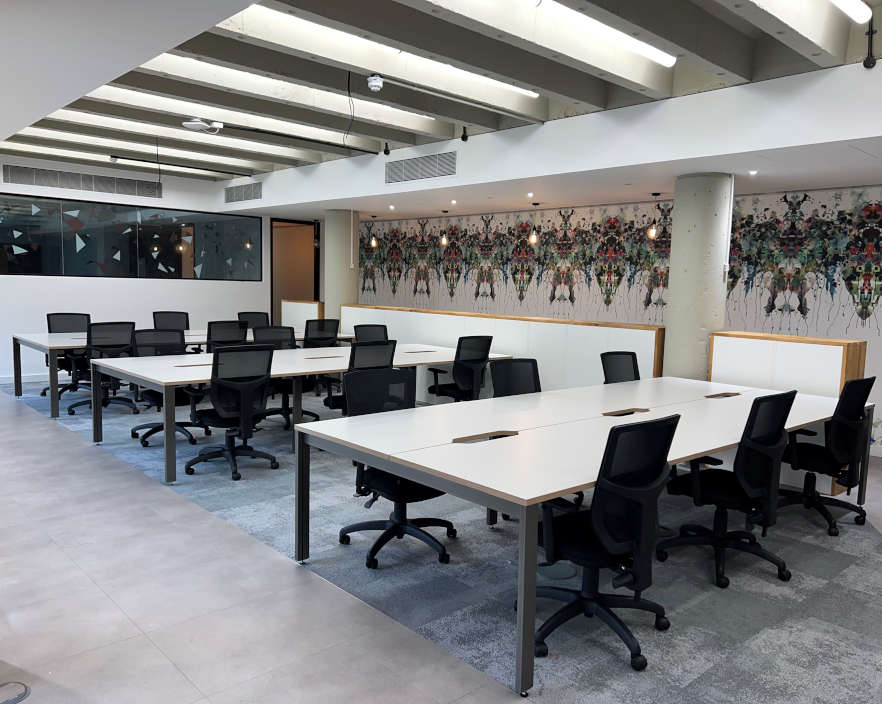
Second-Hand Bench Desks Can Be Particularly Good Value

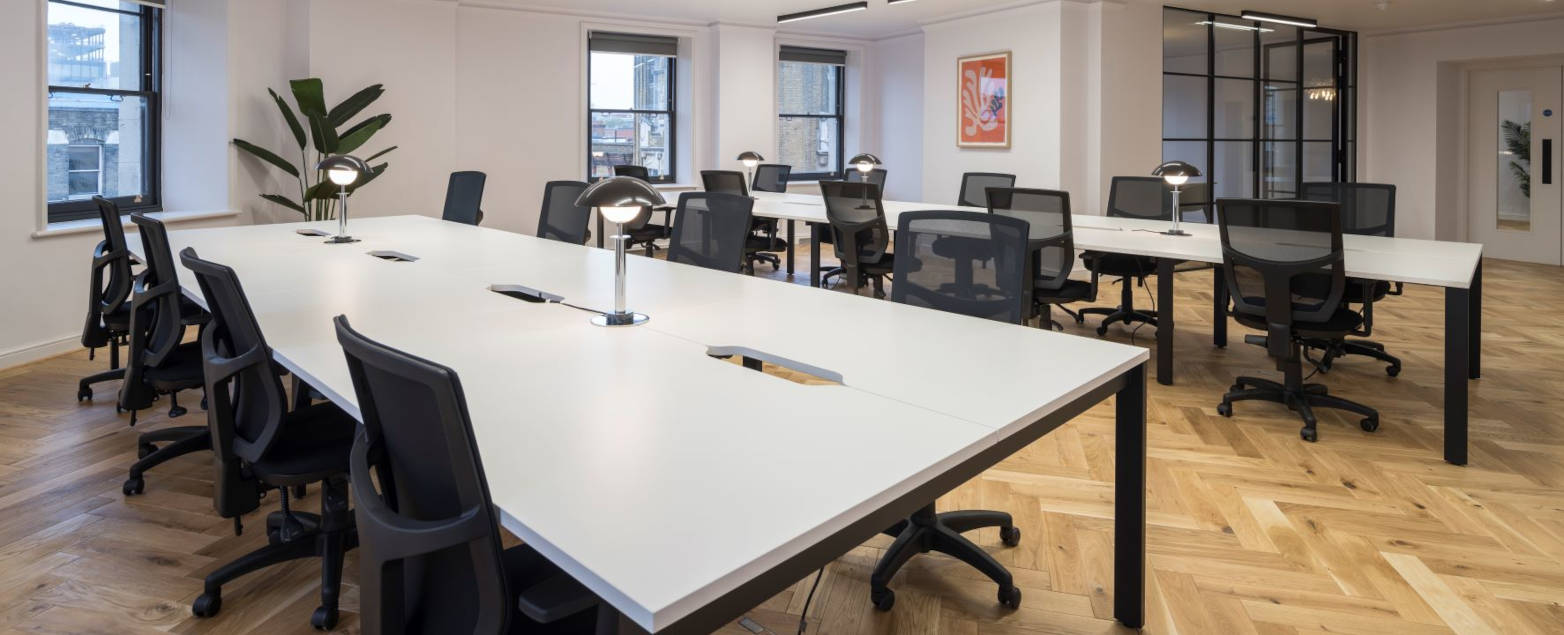
Bench desking deserves its own mention because it works particularly well in many modern offices.
Commercial bench systems group several workstations around a shared structure. They can make efficient use of floor space, provide consistent cable management and create a clean, coordinated appearance.
They also highlight one of the most interesting comparisons in the second-hand market.
A business might find itself choosing between brand-new low-cost desks and used commercial-grade bench desks.
The new product hasn't been used before.
But that doesn't necessarily make it the better desk.
The commercial system may offer stronger construction, better cable management and a design intended for years of workplace use.
This is why purchase price alone doesn't determine value.
We've covered this comparison in The False Economy of Flat-Pack Furniture: Why Second-Hand Bench Desks Can Be the Smarter Investment.
What About Second-Hand Office Chairs?
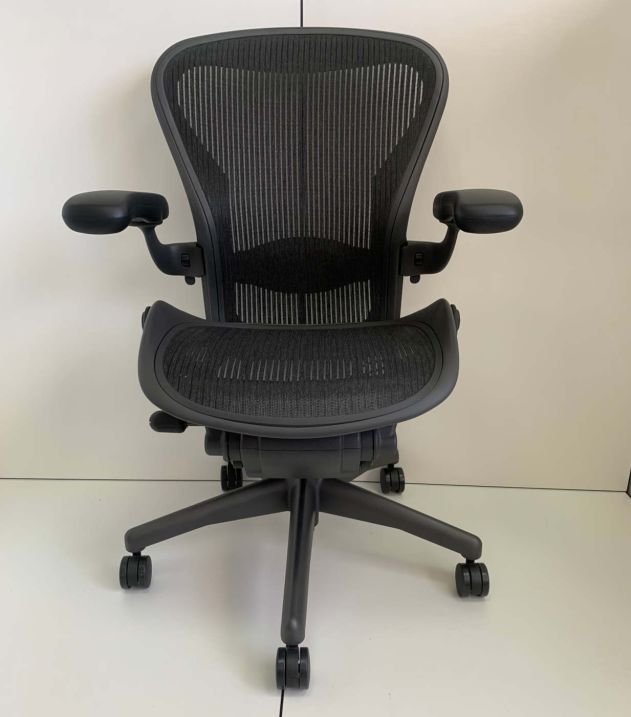
Chairs need slightly different consideration.
A desk is largely structural. A chair contains moving components and directly affects the comfort of the person using it.
That doesn't mean you should avoid second-hand chairs.
High-quality commercial seating can be designed for years of intensive use, and components on many premium chairs can be replaced or refurbished.
But condition matters.
Check whether the gas lift works correctly. Test the tilt and adjustment mechanisms. Inspect the castors and arms. Look at the upholstery and, importantly, consider whether the seat still provides appropriate support.
For some fit-outs, buying quality second-hand desks and investing more of the available budget in new seating can make excellent sense.
There's no rule saying everything in the office needs to be new or everything needs to be second-hand.
Storage Is Often an Excellent Second-Hand Purchase
Office storage tends to have a relatively straightforward job.
Pedestals, cupboards and filing cabinets don't usually experience the same type of wear as upholstered seating.
Quality commercial storage can therefore remain useful for many years.
Check drawers, runners, locks, handles and hinges. With taller cupboards or cabinets, make sure the structure remains stable.
There's also another question to ask before buying:
Do you actually need it?
Modern offices often require less physical filing than they once did. Buying ten inexpensive second-hand filing cabinets isn't a saving if the business only needs three.
The cheapest piece of furniture is still wasted money if it occupies valuable floor space without solving a problem.
New vs Second-Hand Doesn't Have to Be a Battle
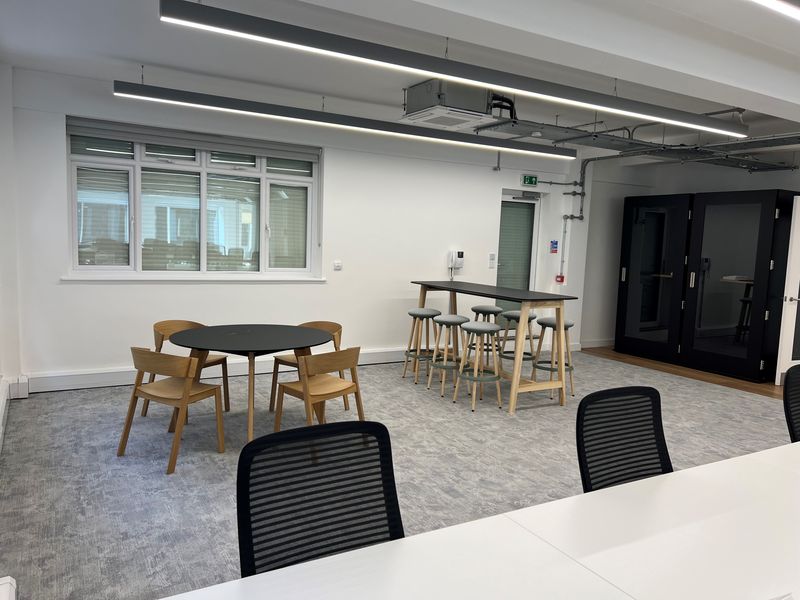
One of the biggest mistakes businesses make is treating this as an all-or-nothing decision.
A successful fit-out can contain both.
Perhaps second-hand commercial desks and storage allow you to spend more on new ergonomic seating.
Maybe you find an excellent used boardroom table but choose new chairs to complement the interior design.
Or perhaps a second-hand bench system handles the main open-plan office while you specify new furniture for a reception or executive area.
The aim is not to prove that one category is universally superior.
It's to create the best workplace within the available budget.
Our guide to New vs Second-Hand Office Furniture looks at exactly when each option makes sense.
Don't Forget Matching Quantities
This becomes increasingly important as the office gets larger.
If you're furnishing two workstations, matching isn't particularly difficult.
If you're furnishing forty, it matters considerably more.
A professional workplace usually benefits from consistent desk sizes, finishes and layouts.
Commercial clearances can make large quantities of identical furniture available, but second-hand stock is finite.
Once a particular batch has gone, another matching desk may not become available.
So, if you expect your team to grow, think ahead.
It may make sense to buy a small number of additional matching workstations while they're available.
However, avoid furnishing an imaginary company. Buying twenty spare desks because the business might eventually double in size simply ties up money and floor space.
Plan sensibly for realistic growth.
Delivery and Installation Matter More Than You Might Think
Finding the furniture is only half the job.
It still needs to reach the office.
Commercial desks can be heavy. Bench systems may contain multiple frames, beams and worktops. Storage needs careful handling, and everything must eventually end up in the correct position.
This is where comparing product prices alone can become misleading.
One retailer might quote for furniture delivered flat-packed on a pallet.
Another price might include getting the furniture into the workplace, assembling it and positioning it ready for use.
Those aren't the same service.
At Andrews Office Furniture, we operate our own delivery and installation teams across London and the M25. Our teams can deliver furniture into the office, assemble it and position it according to the planned layout.
When they leave, the aim is simple:
The furniture should be ready for your team to use.
For a business working to a tight relocation or fit-out schedule, that can make a significant difference.
Is Second-Hand Furniture More Sustainable?
Extending the life of existing furniture has an obvious environmental advantage.
A desk that's already been manufactured doesn't require another desk to be manufactured simply because its original owner no longer needs it.
Keeping good commercial furniture in circulation makes better use of the materials and energy already invested in producing it.
However, we'd avoid treating sustainability as an excuse to reuse unsuitable furniture.
A damaged chair doesn't become a good purchase because it's second-hand.
A structurally compromised desk shouldn't remain in use simply to avoid replacement.
Sustainable purchasing still needs to be good purchasing.
The strongest case for reuse occurs when high-quality furniture remains perfectly capable of doing the job.
Common Mistakes When Buying Second-Hand Office Furniture
The first mistake is buying purely on price.
Cheap furniture isn't good value if it isn't suitable for commercial use.
The second is focusing too heavily on cosmetic appearance.
A small scratch can look dramatic in a photograph while having absolutely no effect on performance. Meanwhile, a clean desktop can hide a weak frame underneath.
The third mistake is forgetting quantities and future growth.
The fourth is ignoring delivery and assembly until after the purchase.
And finally, don't assume that buying from several different sources will automatically save money.
Coordinating collections, matching products and arranging separate installations can quickly turn a bargain into a project.
Look at the whole fit-out, not simply each individual item.
A Practical Checklist Before You Buy
Before committing to second-hand office furniture, we'd ask:
-
Was the furniture originally designed for commercial use?
-
Is the structure sound and stable?
-
Are worktops, mechanisms and moving components in suitable condition?
-
Can you obtain enough matching pieces?
-
Will the furniture fit the available space?
-
Does it provide the cable management and functionality you need?
-
Can you source additional items if the business grows?
-
Who will deliver it?
-
Who will assemble it?
-
What happens to your existing furniture?
-
Are you saving money without compromising the things employees use every day?
If you can answer those questions confidently, you're in a much better position to judge whether the furniture represents genuine value.
Buying for the Office You Actually Need
Perhaps the most important lesson has nothing specifically to do with second-hand furniture.
Don't start with a catalogue.
Start with the business.
How many people use the office?
How do they work?
How many people meet together?
How much storage do they genuinely need?
Is headcount likely to change?
What furniture do employees interact with throughout the day?
Once you understand those requirements, you can decide where buying new makes sense and where second-hand commercial furniture could make the budget work considerably harder.
We explored this approach practically in How to Furnish a 20-Person Office Without Wasting Your Budget.
Good office planning isn't about filling every available space with furniture.
It's about giving people the furniture they actually need to work well.
Final Thoughts
Second-hand office furniture shouldn't be viewed as the cheaper substitute for "proper" office furniture.
When chosen carefully, it is proper commercial office furniture—just at a different stage of its working life.
The key is knowing what you're buying.
Look beyond age. Look beyond a few cosmetic marks. Look beyond the price printed on the listing.
Consider original build quality, structural condition, remaining useful life, matching quantities, suitability for your workplace and what happens after you've placed the order.
Sometimes buying new will be the right decision.
Sometimes second-hand will allow you to access substantially better commercial furniture within the same budget.
And sometimes the best office will combine both.
At Andrews Office Furniture, decades of working with new and second-hand furniture have taught us that the smartest purchase isn't necessarily the newest or the cheapest.
It's the furniture that's right for the job, right for the budget and built to keep working.